Blog

  • Law Firm SEO: Driving Qualified Leads Online

    Law Firm SEO: Driving Qualified Leads Online

    Law Firm SEO Guide: Turn Google Traffic into Qualified Legal Leads

    A strong digital presence is essential for marketing managers who want their firm to be noticed in a crowded marketplace. This guide reveals actionable Law Firm SEO techniques designed to turn online attention into qualified leads and increased credibility for your practice.

    Defining Law Firm SEO and Its Value

    Law Firm SEO represents a strategic digital marketing approach designed to enhance a law practice’s online visibility and attract potential clients through targeted search engine optimization techniques. Most potential clients begin their legal service search online, making a digital presence critically important.

    At its core, Law Firm SEO involves optimizing a law firm’s website and digital assets to rank higher in search engine results pages (SERPs) for relevant legal keywords and practice area searches. This process encompasses multiple sophisticated strategies, including:

    • technical website optimization,
    • high-quality content creation,
    • local search prominence,
    • reputation management,
    • and strategic link building.

    The ultimate goal is transforming online visibility into qualified client leads by positioning the law firm as a credible, authoritative resource for individuals seeking legal representation.

    Marketer working on law firm SEO website

    Successful Law Firm SEO goes beyond simple keyword placement. It requires understanding user intent, creating informative content that addresses potential clients’ specific legal questions, and demonstrating expertise through comprehensive, trustworthy online materials.

    Techniques might include developing practice area specific landing pages, publishing authoritative blog content, maintaining accurate Google Business Profile listings, and generating positive client reviews that enhance search credibility.

    Pro tip: Invest in creating detailed, practice-specific content that directly answers common legal questions potential clients are searching online, which simultaneously improves SEO performance and establishes your firm’s expertise.

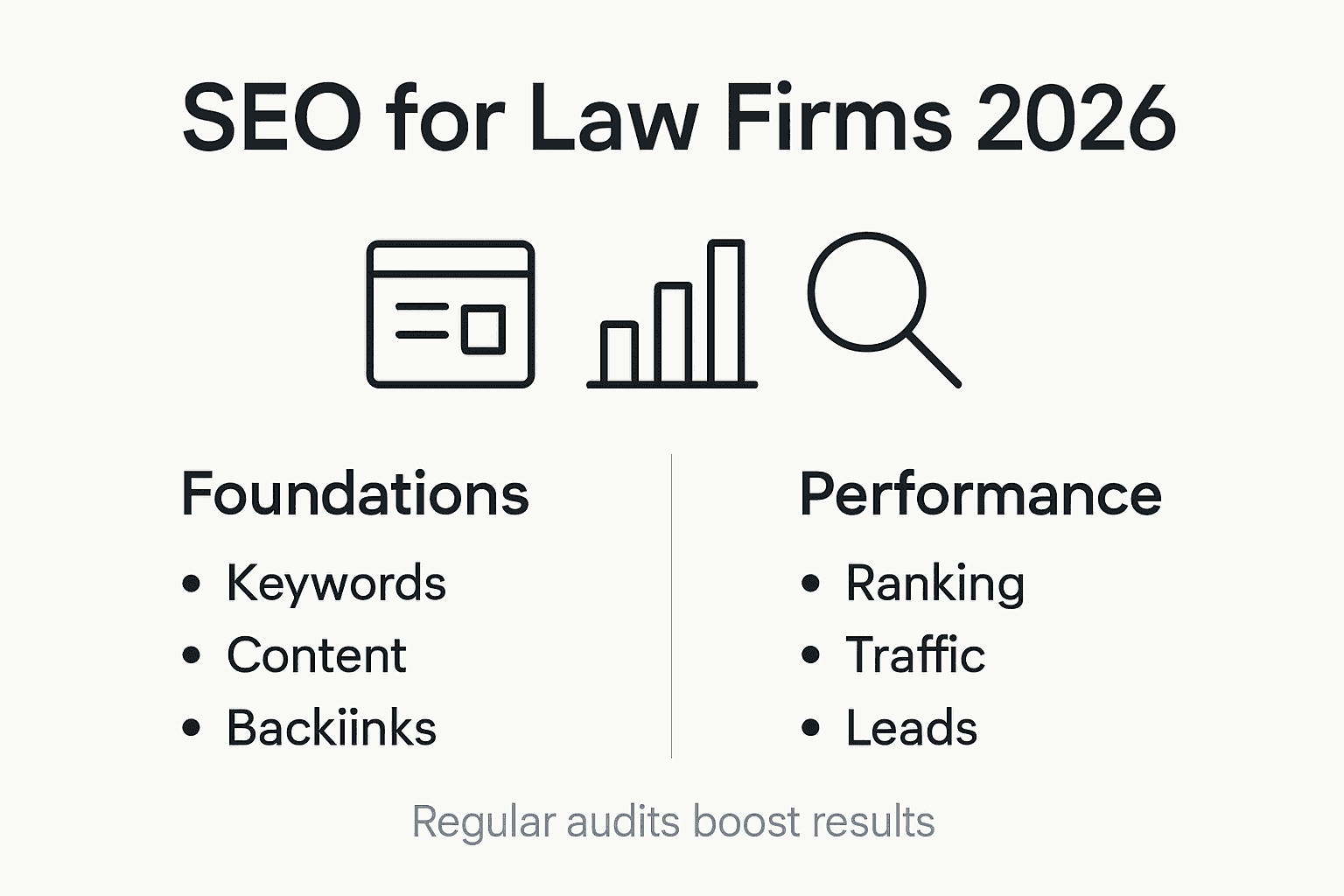
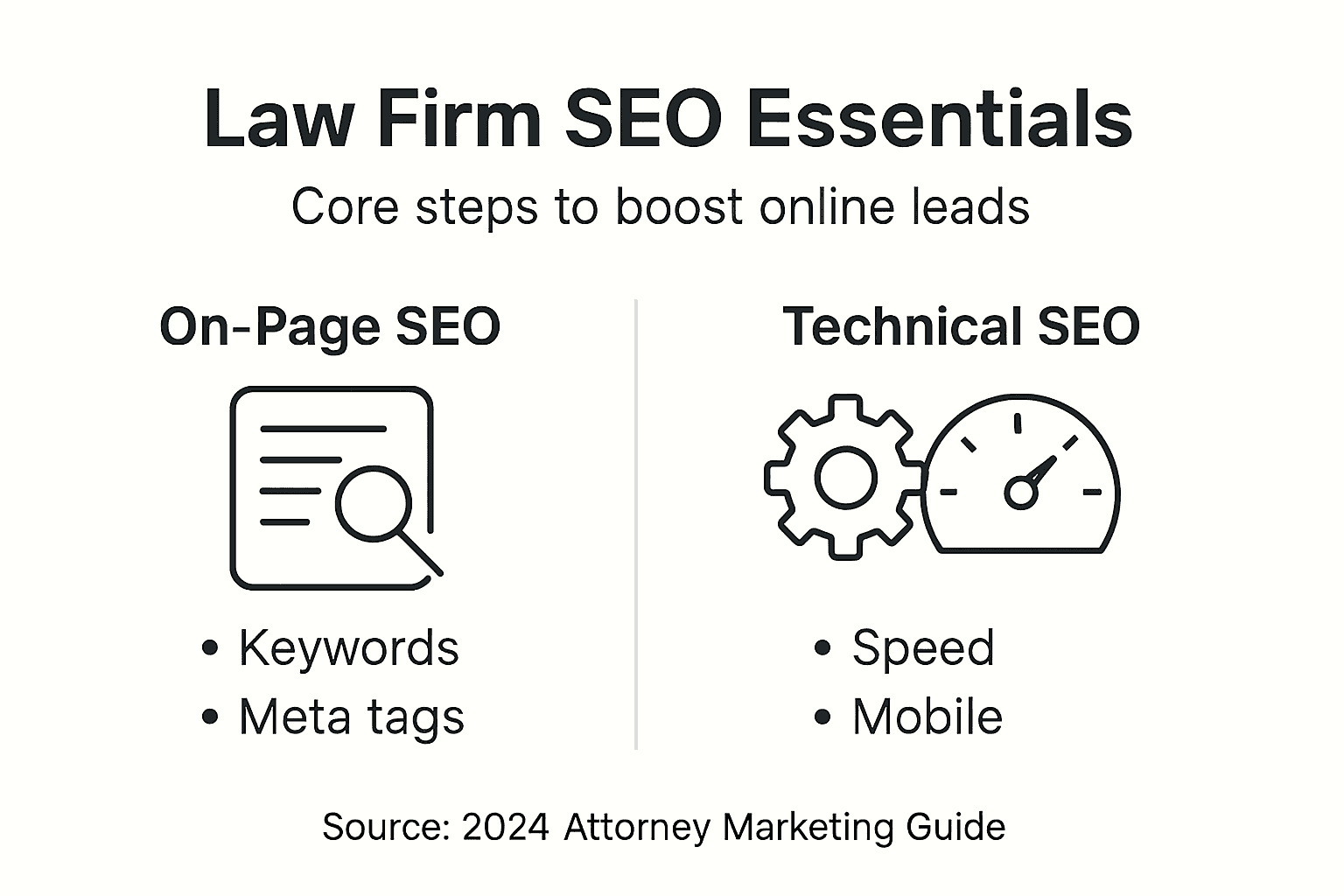
    On-page SEO for legal websites is a comprehensive strategy focused on optimizing individual web pages to improve search engine rankings and user engagement. Effective on-page optimization requires a multi-faceted approach that addresses technical, content, and user experience elements specific to law firm websites.

    Key on-page SEO elements for legal websites include strategic keyword placement, metadata optimization, and content development.

    Attorneys must carefully craft page titles, headers, and meta descriptions that accurately reflect their practice areas while incorporating relevant search terms. This involves developing content that not only ranks well in search results but also provides genuine value to potential clients seeking legal information.

    Critical components include creating practice-area specific landing pages, developing comprehensive FAQ sections, and ensuring that each page clearly communicates the firm’s expertise and service offerings.

    Technical optimization plays an equally crucial role in on-page SEO for law firms. This encompasses improving website structure, enhancing page load speeds, ensuring mobile responsiveness, and implementing clean, descriptive URL structures. Website navigation should be intuitive, allowing potential clients to easily find information about specific legal services.

    Additionally, internal linking strategies can help distribute page authority and guide users through the firm’s content, ultimately improving both user experience and search engine crawlability.

    Pro tip: Conduct a quarterly content audit to ensure your legal website’s pages remain current, relevant, and optimized for the most up-to-date search terms and client needs.
    Infographic on SEO for law firm websites

    Building Local SEO for Law Offices

    Local SEO is a critical digital marketing strategy for law offices seeking to attract clients within their geographic region. Local search optimization has become essential as potential clients typically search for legal services with location-specific intent, such as ‘personal injury lawyer in Chicago’ or ‘family attorney near me’.

    Building an effective local SEO strategy requires a comprehensive approach that goes beyond simple geographic targeting. Law firms must meticulously manage their online presence across multiple platforms, with special emphasis on Google Business Profile optimization.

    This involves ensuring complete and accurate business information, including precise address details, practice area specializations, contact information, and operating hours. Regular updates, high-quality images of the law office, and consistent NAP (Name, Address, Phone) information across all online directories are fundamental to establishing local search credibility.

    Client reviews and local directory listings represent powerful components of local SEO for law offices. Attorneys should actively encourage satisfied clients to leave positive reviews on platforms like Google, Yelp, and specialized legal directories. These reviews not only improve local search rankings but also build trust with potential clients.

    Additionally, obtaining citations from reputable local business associations, legal professional networks, and community organizations can significantly enhance a law firm’s local search visibility and perceived authority within their specific geographic market.

    Pro tip: Implement a systematic approach to collecting and responding to client reviews, treating each review as an opportunity to demonstrate your firm’s commitment to client satisfaction and professional excellence.

    To better understand the key differences, here’s a comparison of On-Page SEO and Local SEO for law firms:

    Aspect On-Page SEO Local SEO
    Main Focus Optimizing website content and structure Increasing visibility in local searches
    Key Tools Metadata, headers, internal links Google Business Profile, local directories
    Primary Benefit Higher search rankings site-wide More local client inquiries
    Unique Challenge Balancing keywords and readability Maintaining consistent business details

    Content Marketing Strategies for Attorneys

    Content marketing represents a powerful approach for attorneys to establish thought leadership and attract potential clients. Content marketing effectiveness depends on creating valuable, targeted materials that directly address potential clients’ legal questions and concerns, transforming complex legal concepts into accessible, informative resources.

    Successful content strategies for law firms involve developing a diverse range of educational materials tailored to different client needs and legal scenarios. This includes:

    • crafting comprehensive blog posts explaining legal processes,
    • producing detailed practice area guides,
    • creating video explanations of common legal challenges,
    • and developing FAQ sections that anticipate potential client questions.

    Attorneys should focus on addressing specific client pain points, using clear language that demystifies legal terminology and provides practical insights into various legal challenges.

    The key to exceptional legal content marketing lies in maintaining a consistent, strategic approach to content creation and distribution. Law firms must develop a content calendar that ensures regular publication across multiple platforms, including their website, social media channels, and professional networks.

    Tracking content performance through analytics allows attorneys to refine their strategy, identifying which topics resonate most with potential clients and adjusting their approach to maximize engagement and lead generation. Specialized content that demonstrates deep expertise in specific practice areas can help differentiate a law firm from competitors and build trust with potential clients.

    Pro tip: Create a content repository of evergreen legal resources that can be repurposed across multiple platforms, maximizing your marketing efforts and providing consistent value to potential clients.

    Common Pitfalls in Law Firm SEO

    Law firms frequently encounter significant challenges when implementing digital marketing strategies, with critical SEO mistakes potentially undermining their online visibility and client acquisition efforts. These pitfalls range from technical oversights to strategic misconceptions that can dramatically reduce a law practice’s digital performance.

    One of the most prevalent errors is keyword mismanagement, which includes both excessive keyword stuffing and insufficient strategic keyword placement.

    Many attorneys mistakenly believe that cramming legal terms into website content will improve search rankings, when in fact this approach can trigger search engine penalties.

    Equally problematic is neglecting local SEO tactics, failing to optimize Google Business Profiles, and inconsistent digital business information across online directories. These oversights can significantly diminish a law firm’s ability to appear in location-specific searches where potential clients are most likely to find legal representation.

    Another critical area of concern involves content quality and user experience. Law firms often produce dense, jargon-heavy content that fails to address potential clients’ actual needs and questions.

    Successful SEO requires creating clear, informative content that demonstrates expertise while remaining accessible to individuals seeking legal guidance. This means moving beyond technical explanations to provide practical insights, addressing common legal concerns, and presenting information in a user-friendly manner that encourages engagement and builds trust.

    Pro tip: Conduct a quarterly comprehensive audit of your law firm’s online presence, systematically reviewing website content, local listings, and SEO performance to identify and promptly address potential optimization gaps.

    Below is a summary of common law firm SEO mistakes and practical ways to avoid them:

    Pitfall Why It Hurts Prevention Step
    Keyword stuffing Lowers ranking, hurts readability Research and use phrases naturally
    Ignoring local SEO Misses local clientele Optimize local listings and NAP data
    Outdated content Reduces trust, poor rankings Schedule quarterly content reviews
    Inconsistent info online Confuses search engines and clients Standardize firm details everywhere

    Unlock the True Potential of Your Law Firm’s Online Presence

    Struggling to convert website visitors into qualified leads can be frustrating for any law firm.

    If keywords, local listings, or consistent business information seem overwhelming, you are not alone. Many attorneys face difficulties in creating engaging, accessible content that builds trust while improving search rankings.

    That is where expert support from a seasoned partner makes all the difference. At LawSmiths, we specialize in tailored digital marketing solutions crafted specifically for legal practices. With over 25 years of experience, we understand how to enhance your website’s SEO, optimize your Google Business Profile for local dominance, and produce compelling content that resonates with your ideal clients.

    Our full-service approach covers everything from strategy development to marketing execution so you can focus on practicing law while we drive quality leads.

    Ready to rise above the competition and secure your firm’s digital future? Discover how our comprehensive services can transform your online visibility today at LawSmiths. Don’t miss out on potential clients actively searching for experienced attorneys like you. Call (833) 217-2991 now to schedule a free law firm SEO consultation.

    Frequently Asked Questions

    What is Law Firm SEO?

    Law Firm SEO is a digital marketing strategy aimed at improving a law practice’s online visibility and attracting potential clients through optimized search engine techniques.

    Why is local SEO important for law firms?

    Local SEO enhances a law firm’s visibility in location-specific searches, which is crucial for attracting clients looking for legal services in their area.

    How can content marketing benefit attorneys?

    Content marketing helps attorneys establish thought leadership and attract potential clients by providing valuable and informative resources that address their legal questions and concerns.

    What are common mistakes to avoid in Law Firm SEO?

    Common mistakes include keyword stuffing, neglecting local SEO, producing outdated content, and inconsistency in online information, all of which can harm a law firm’s online visibility and client acquisition efforts.


  • What Is Off Page SEO for Law Firms?

    What Is Off Page SEO for Law Firms?

    Off-Page SEO for Law Firms: Strategies That Actually Get You Ranked

    Every law firm faces stiff competition when trying to capture attention from potential clients online. With most clients starting their search for legal services on search engines, off-page SEO becomes a critical advantage for legal marketing managers seeking greater visibility.

    Understanding the power of quality backlinks, online reviews, and strategic mentions will help your firm build authority and trust, setting the stage for stronger search rankings and more qualified leads.

    Defining Off Page SEO for Law Firms

    Off-page SEO represents strategic activities performed outside your law firm’s website to improve search engine rankings and online visibility. Unlike on-page optimization, which focuses on website content, off-page SEO involves external factors that signal your firm’s credibility and authority to search engines.

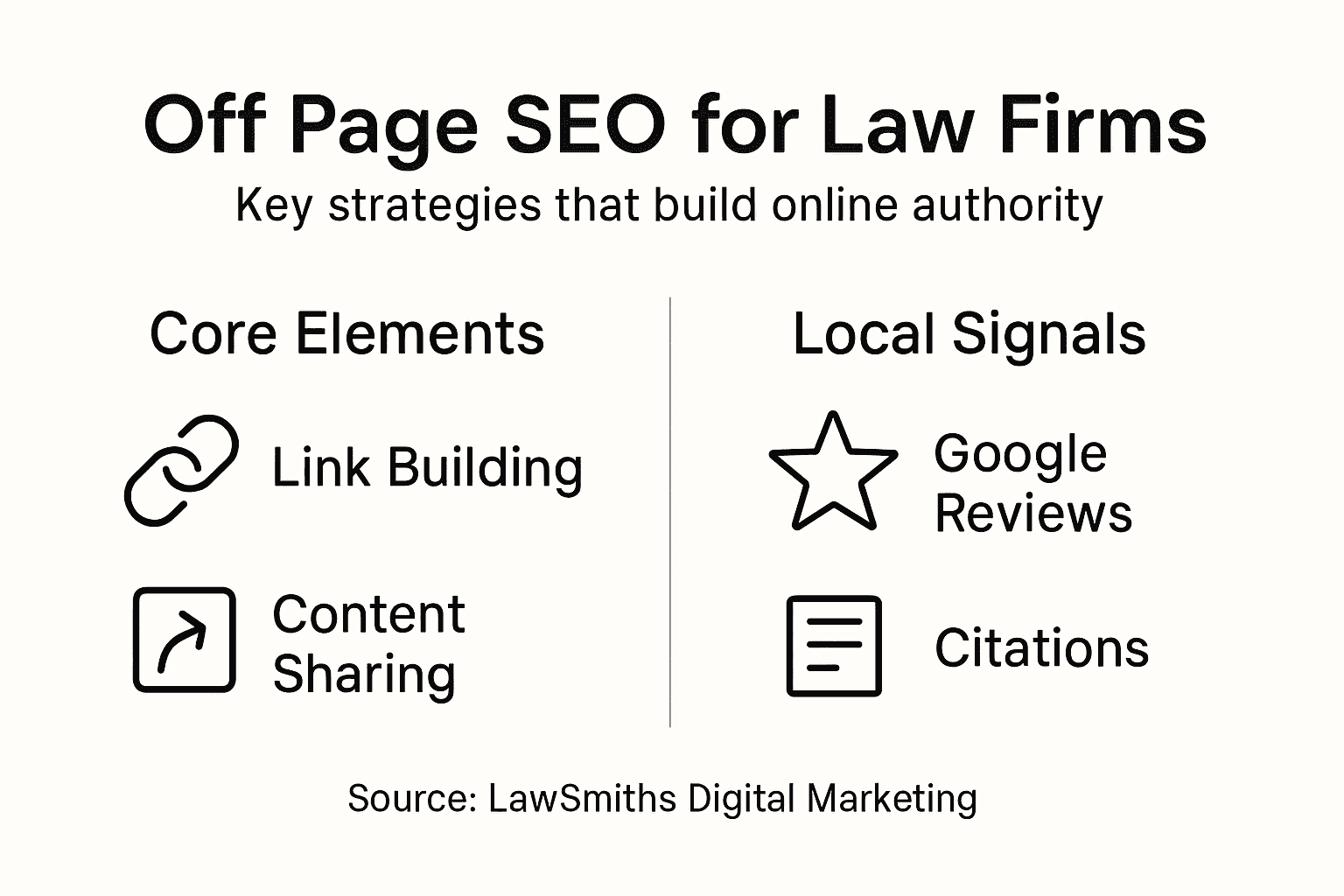
    The core components of off-page SEO for law firms include:

    • Link building from reputable legal and industry websites
    • Creating high-quality external content like guest articles and legal publications
    • Managing online reputation through professional reviews and citations
    • Developing social media engagement across legal professional networks
    • Generating authoritative mentions in legal directories and professional platforms

    Search engine optimization strategies recognize that off page SEO goes beyond traditional marketing by building digital credibility through strategic external interactions. For law firms, this means establishing trust signals that demonstrate expertise, reliability, and professional standing.

    Search engines like Google evaluate a law firm’s online reputation through complex algorithms that assess external validation. These algorithms analyze factors such as backlink quality, social signals, and third-party references to determine website authority and ranking potential. A robust off page SEO strategy helps law firms appear more prominently in search results, ultimately attracting more potential clients.

    Pro tip: Consistently monitor and cultivate your law firm’s online reputation across multiple platforms to strengthen your off-page SEO performance.

    Key Off Page SEO Techniques Explained

    Off-page SEO techniques are strategic actions law firms can implement to enhance their digital reputation and search engine rankings.

    These external optimization strategies focus on building credibility and authority beyond the firm’s primary website, creating a comprehensive digital presence that attracts potential clients and improves online visibility.

    The most effective off-page SEO techniques for law firms include:

    • Link building through high-quality legal and professional websites
    • Creating authoritative guest content on reputable platforms
    • Managing online reputation with strategic review management
    • Developing professional social media engagement
    • Generating citations in legal directories and professional networks

    Strategic off page optimization techniques involve multiple approaches that signal a law firm’s expertise and trustworthiness to search engines. By carefully cultivating external signals of authority, law firms can significantly improve their digital marketing effectiveness and attract more potential clients through enhanced search visibility.

    Lawyer checking online reviews in office

    Successful off-page SEO requires consistent effort across multiple digital channels. Search engines evaluate law firms based on external validation, analyzing factors like backlink quality, social media interactions, professional mentions, and overall online reputation. A comprehensive strategy that integrates these elements can help law firms establish themselves as trusted, authoritative sources in their legal specialties.

    Here’s a comparison of key off-page SEO elements and their impact on law firm visibility:

    Off-Page Element How It Works Typical Impact Example Metric
    High-Quality Backlinks Links from trusted sources Boosts search ranking Domain authority score
    Guest Content Placement Publish on external platforms Increases brand exposure Referral traffic rate
    Social Engagement Active professional profiles Enhances reputation signals Follower growth
    Directory Citations Listings in legal directories Improves local visibility Citation consistency

    Pro tip: Develop a systematic approach to tracking and improving your law firm’s external digital footprint, focusing on quality over quantity in all off page SEO efforts.

    Links represent a critical component of off-page SEO for law firms, with each type carrying unique legal and search engine optimization implications. Understanding the nuanced landscape of digital linking helps law firms strategically build their online presence while maintaining legal compliance and professional standards.

    The primary types of links law firms should understand include:

    • Backlinks from legal and professional directories
    • Guest post links on reputable legal publications
    • Local business directory references
    • Professional association website links
    • Authoritative legal resource citations

    Legal linking practices involve careful consideration of potential copyright and trademark implications. Deep linking directly to specific webpages is generally considered legal, but law firms must remain vigilant about the content they link to and ensure they are not inadvertently supporting unauthorized or potentially harmful content.

    Search engines evaluate link quality through multiple lenses, examining factors like domain authority, relevance, and the professional context of the linking website. Law firms must prioritize obtaining links from highly respected legal websites, professional journals, bar associations, and recognized industry publications to maximize their SEO effectiveness and maintain professional credibility.

    Infographic showing law firm off page SEO elements

    Pro tip: Conduct regular audits of your external links to ensure they remain current, relevant, and aligned with your firm’s professional standards and ethical guidelines.

    Reputation, Branding, and Local Signals Online

    Reputation management represents a critical digital strategy for law firms seeking to establish trust and credibility in the competitive legal marketplace. Online branding extends far beyond traditional marketing, requiring a comprehensive approach that integrates digital presence, client perception, and strategic visibility across multiple platforms.

    Key components of online reputation and local signals include:

    • Google My Business profile optimization
    • Client review management across multiple platforms
    • Local directory listings with consistent contact information
    • Professional association memberships and credentials
    • Social media professional profiles

    Local search engine optimization helps law firms enhance their visibility by strategically positioning their digital footprint to attract local clients. This involves carefully crafting online signals that demonstrate professional expertise, geographic relevance, and community connection through targeted digital strategies.

    Search engines and potential clients evaluate law firms through complex digital reputation metrics, examining factors like consistent contact information, quality of online reviews, professional citations, and engagement across digital platforms. Successful law firms understand that their online reputation is a dynamic ecosystem requiring continuous monitoring, strategic management, and proactive reputation building.

    Pro tip: Develop a systematic approach to monitoring and responding to online reviews, ensuring every digital interaction reflects your firm’s professional standards and commitment to client satisfaction.

    Risks, Penalties, and What Law Firms Should Avoid

    Off page SEO for law firms involves navigating complex ethical and legal landscapes where strategic digital marketing must balance visibility with professional integrity. Understanding potential risks helps law firms develop robust online strategies that protect their reputation while effectively attracting potential clients.

    Key risks and practices law firms must avoid include:

    • Keyword stuffing in online content
    • Purchasing low-quality backlinks
    • Misrepresenting professional credentials
    • Violating client confidentiality in digital content
    • Generating fake online reviews

    Cybersecurity and legal ethics demand rigorous compliance with professional standards when developing digital marketing strategies. Law firms must carefully manage their online presence to prevent potential violations that could compromise client trust or trigger regulatory penalties.

    Search engines and professional regulatory bodies scrutinize law firm digital marketing with increasing sophistication, penalizing practices that misrepresent services or violate ethical guidelines. Penalties can range from search ranking demotions to potential disciplinary actions from state bar associations, making strict adherence to white-hat SEO techniques critical for long-term professional success.

    The following table summarizes common risks in law firm off page SEO and their potential consequences:

    Risky Practice Why It’s Problematic Possible Outcome
    Buying Low-Quality Links Violates search engine rules Search ranking penalties
    Fake Review Generation Breaches legal ethics Damaged reputation
    Credentials Misrepresentation Misleads potential clients Regulatory investigations
    Keyword Stuffing Manipulative content signals Lowered content credibility

    Pro tip: Implement a comprehensive digital marketing compliance review process that involves legal professionals and marketing experts to ensure all online content meets professional ethical standards.

    Elevate Your Law Firm’s Off Page SEO with Expert Digital Marketing

    Understanding the critical role of off page SEO in improving your law firm’s online authority and client trust is just the first step. You know that high-quality backlinks, reputation management, and local search signals are essential to boost your visibility in search results and attract more clients. Yet building a strong external digital presence can feel overwhelming without the right expertise and strategy.

    At LawSmiths, we specialize in offering tailored digital marketing solutions designed specifically for legal practices like yours. With over 25 years of experience, we focus on effective SEO strategies including quality link building, reputation enhancement, and targeted local marketing.

    Ready to transform your off page SEO challenges into growth opportunities? Call (833) 217-2991 now to schedule a free law firm off page SEO consultation.

    Frequently Asked Questions

    What is off page SEO for law firms?

    Off page SEO for law firms refers to the strategies and activities carried out outside a firm’s website to improve its search engine rankings and online visibility, focusing on building credibility and authority through external factors.

    Link building is crucial for law firms because high-quality backlinks from reputable legal websites signal credibility and expertise to search engines, improving the firm’s search ranking and attracting more potential clients.

    How can law firms manage their online reputation?

    Law firms can manage their online reputation by actively responding to client reviews, maintaining an optimized Google My Business profile, and ensuring consistent and accurate listings in local directories.

    What are some common risks associated with off page SEO for law firms?

    Common risks include purchasing low-quality backlinks, generating fake reviews, and misrepresenting professional credentials, which can lead to search ranking penalties, regulatory investigations, and damaged reputation.

  • Law Firm Advertising Campaigns: Driving Client Growth

    Law Firm Advertising Campaigns: Driving Client Growth

    How Top Law Firms Use Advertising Campaigns to Explode Client Growth

    Every law firm faces the challenge of standing out while maintaining professional integrity. As competition for client acquisition intensifies, the need for targeted communication that reflects both legal expertise and ethical standards has never been greater.

    This guide offers practical strategies for developing law firm advertising campaigns that balance compelling outreach with regulatory requirements, empowering marketing managers to attract quality clients and build lasting credibility.

    Defining Law Firm Advertising Campaigns

    Law firm advertising campaigns represent strategic marketing efforts designed to attract potential clients, build brand recognition, and ultimately grow legal practice revenue. Unlike traditional business marketing, legal advertising operates within strict ethical guidelines and professional regulations.

    Legal advertising historically emerged after a pivotal 1977 Supreme Court ruling that affirmed attorneys’ constitutional rights to promote their services.

    These campaigns encompass multiple channels and strategies specifically tailored to legal professionals, including:

    • Digital marketing tactics
    • Social media engagement
    • Targeted online advertisements
    • Content marketing initiatives
    • Reputation management efforts

    Successful law firm advertising campaigns require a nuanced understanding of both marketing principles and legal professional standards. The American Bar Association emphasizes that advertising should simultaneously inform potential clients and maintain the dignity of legal practice. This means creating messaging that is both compelling and professionally appropriate.

    Modern law firm advertising strategies focus on demonstrating expertise, building trust, and communicating unique value propositions. Targeted communication becomes critical, with campaigns designed to speak directly to specific legal service needs.

    Digital marketing services now play a central role in reaching potential clients through sophisticated, data-driven approaches.

    Pro tip: Develop advertising content that educates potential clients while subtly highlighting your firm’s specialized expertise and proven track record.

    Key Campaign Types and Approaches

    Law firms leverage multiple advertising campaign types to reach potential clients and differentiate their legal services in a competitive marketplace. Legal advertising strategies encompass a diverse range of approaches tailored to specific practice areas and target demographics.

    Key campaign types include:

    Digital Marketing Campaigns

    • Search engine optimization (SEO)
    • Pay-per-click (PPC) advertising
    • Social media marketing

    Content-Based Campaigns

    • Legal blog development
    • Video content marketing
    • Informational website resources

    Local and Targeted Campaigns

    • Geographically focused advertising
    • Practice area-specific messaging
    • Reputation management strategies

    Specialized Practice Areas require nuanced marketing approaches. Personal injury firms often utilize high-visibility advertising channels like television and digital platforms, while criminal defense and family law practices might employ more targeted, discrete marketing strategies. Legal advertising approaches vary significantly based on practice specialization and local market dynamics.

    Successful law firm advertising demands a sophisticated understanding of both marketing principles and legal professional ethics. Campaigns must balance compelling messaging with regulatory compliance, ensuring that potential clients receive accurate, transparent information about available legal services.

    Pro tip: Develop multi-channel marketing strategies that leverage both digital and traditional advertising platforms to maximize client reach and engagement.

    Here’s a comparison of major law firm advertising campaign types and their strategic business impact:

    Campaign Type Main Objective Typical Outcome
    Digital Marketing Increase online visibility Greater web inquiries
    Content-Based Educate and inform prospects Enhanced thought leadership
    Local/Targeted Reach specific geographic audiences Higher local client conversion

    Digital vs. Traditional Advertising Tactics

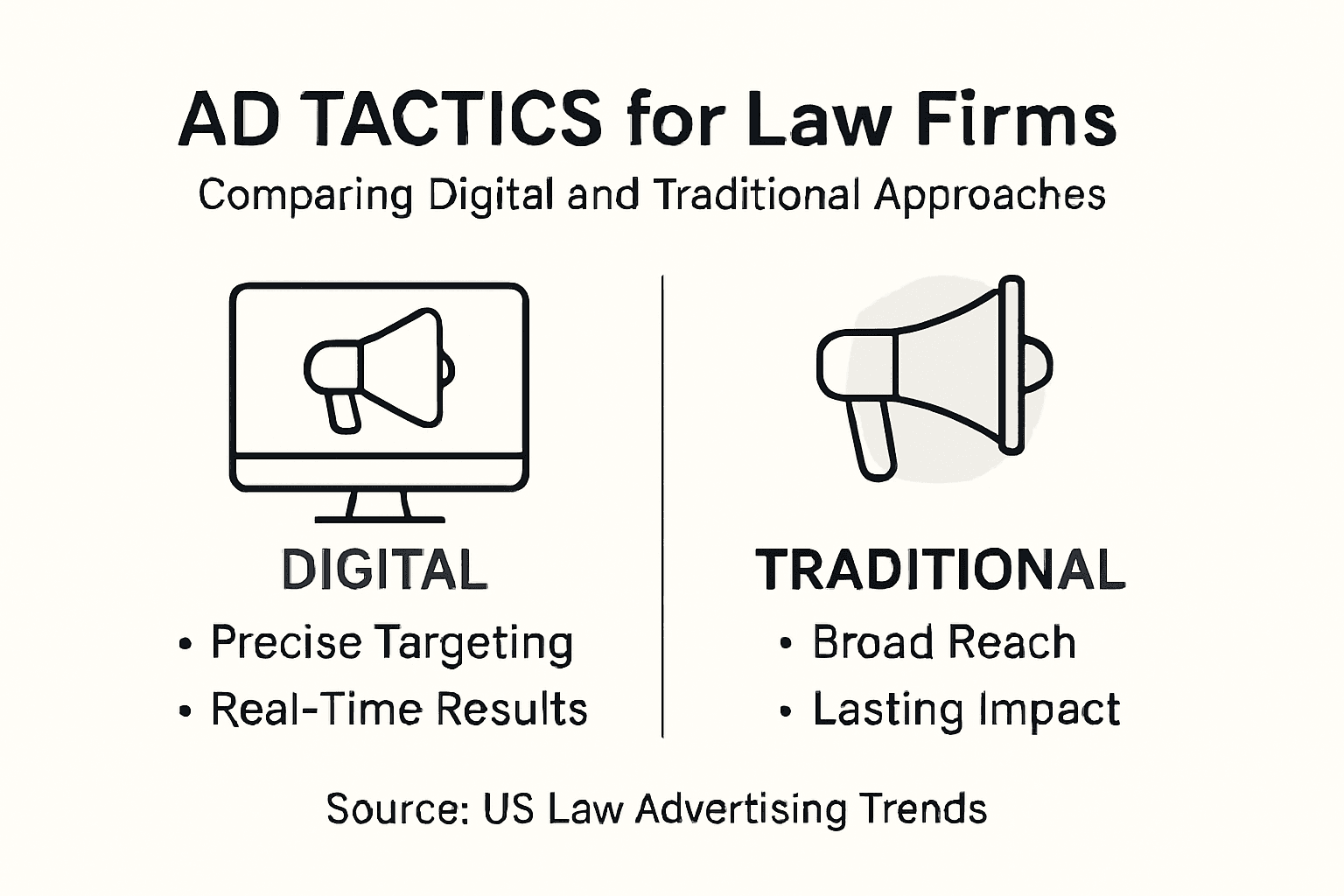
    Law firms today face a critical decision in allocating marketing resources between digital and traditional advertising channels. Digital advertising offers unique measurement advantages through advanced data analytics platforms that enable precise targeting and performance evaluation.

    Infographic showing digital versus traditional ad tactics

    Key differences between digital and traditional advertising include:

    Digital Advertising Strengths:

    • Precise audience targeting
    • Real-time campaign adjustments
    • Lower cost per engagement
    • Detailed performance tracking
    • Immediate interaction capabilities

    Traditional Advertising Strengths:

    • Broader audience reach
    • Emotional connection potential
    • Higher visibility for older demographics
    • Established credibility
    • Tangible brand presence

    Modern law firms increasingly recognize the importance of an integrated marketing approach. Marketing communications research suggests that blending digital and traditional tactics yields the most comprehensive client acquisition strategy. Digital platforms excel in targeted outreach, while traditional media maintains strong emotional engagement potential.

    Successful advertising strategies require law firms to understand their specific target audience, practice area dynamics, and regional market characteristics. This nuanced approach allows for strategic resource allocation across multiple advertising channels, maximizing overall marketing effectiveness.

    Pro tip: Create a balanced advertising portfolio that combines digital precision with traditional media’s broad emotional reach to optimize client acquisition.

    Legal Rules and Ethical Compliance for Ads

    Law firm advertising operates within a complex framework of ethical guidelines and professional standards designed to protect both consumers and the legal profession’s reputation. Lawyer advertising must adhere to constitutional standards while maintaining transparency and professional integrity.

    Key ethical compliance requirements include:

    Prohibited Practices:

    • Making false or misleading statements
    • Creating unjustified expectations about case outcomes
    • Guaranteeing specific legal results
    • Using deceptive imagery or language

    Mandatory Disclosure Elements:

    • Clear identification of advertising as solicitation
    • Accurate representation of legal services
    • Transparent fee structures
    • Verification of professional credentials

    Regulatory Compliance demands meticulous attention to detail. Ethical advertising rules specifically prohibit unauthorized use of competitor names and mandate careful review of all advertising content to prevent potential professional discipline.

    Modern law firms must balance aggressive marketing strategies with strict ethical guidelines. This requires developing advertising materials that are both compelling and compliant, ensuring potential clients receive accurate information while maintaining the legal profession’s fundamental principles of integrity and professional responsibility.

    Pro tip: Implement a comprehensive internal review process for all advertising materials, involving legal ethics experts to ensure full regulatory compliance.

    Budgeting, ROI, and Risk Management

    Law firm advertising requires strategic financial planning that balances marketing investment with potential client acquisition costs.

    Advertising budget decisions involve complex analytical methods that aim to maximize profit while managing inherent marketing uncertainties.

    Key financial considerations for law firm advertising include:

    Budget Allocation Strategies:

    • Percentage of total revenue method
    • Competitive parity approach
    • Performance-based budgeting
    • Goal-driven investment model
    • Historical performance analysis

    Risk Management Components:

    • Tracking cost per acquisition
    • Monitoring conversion rates
    • Evaluating channel performance
    • Setting clear marketing objectives
    • Establishing budget flexibility

    Return on Investment (ROI) calculations become critical in determining advertising effectiveness.

    Successful financial management in law firm advertising demands continuous monitoring, data-driven decision-making, and willingness to adapt strategies based on measurable outcomes. Firms must develop robust tracking mechanisms that provide transparent insights into marketing expenditure and client acquisition metrics.

    Pro tip: Implement a quarterly review process that critically evaluates advertising spending against client acquisition metrics, allowing for rapid strategy adjustments.

    Common Pitfalls and What to Avoid

    Law firm advertising is fraught with potential regulatory and ethical landmines that can quickly derail marketing efforts. Advertising rules often create complex compliance challenges that require meticulous attention to detail and proactive risk management.

    Common advertising pitfalls include:

    Compliance-Related Risks:

    • Making unsubstantiated legal claims
    • Using misleading comparative statements
    • Guaranteeing specific case outcomes
    • Breaching confidentiality in marketing materials
    • Violating state-specific advertising regulations

    Ethical Marketing Mistakes:

    • Misrepresenting professional credentials
    • Exploiting emotional vulnerabilities
    • Creating unrealistic client expectations
    • Inappropriate use of client testimonials
    • Failing to disclose potential limitations

    Keyword advertising misuse represents another significant risk area for law firms. Attorneys must carefully navigate digital marketing strategies to avoid professional discipline and maintain ethical standards. This requires understanding complex jurisdictional nuances and maintaining strict adherence to professional advertising guidelines.

    Successful law firms recognize that effective marketing requires a delicate balance between compelling communication and rigorous ethical compliance. Developing a comprehensive internal review process and staying current with evolving advertising regulations becomes crucial in mitigating potential risks.

    Pro tip: Establish a multi-layer review process involving legal ethics experts to thoroughly vet all advertising materials before publication.

    Accelerate Your Law Firm Advertising Success with Strategic Digital Marketing

    Many legal practices struggle with navigating complex advertising rules while trying to stand out in a competitive digital landscape. Key pain points include reaching the right clients through precise targeting, maintaining professional credibility, and optimizing budgets for maximum client growth.

    At LawSmiths, we specialize in providing law firms with tailored digital marketing strategies that expertly blend all the crucial elements discussed in this article. Our over 25 years of experience ensure your campaigns are not only highly effective but ethically compliant.

    From advanced digital marketing services like SEO and PPC to reputation management and compelling content creation, we help you build trust and differentiate your practice.

    Call (833) 217-2991 today to schedule a free law firm advertising consultation to discover how our full-service solutions can drive your firm’s success with targeted, compliant, and data-driven marketing campaigns designed for legal professionals.

    Frequently Asked Questions

    What are the main types of law firm advertising campaigns?

    Law firm advertising campaigns can be categorized into digital marketing campaigns, content-based campaigns, and local or targeted campaigns. Each type is tailored to meet specific audience needs and legal service areas.

    How can a law firm ensure compliance with advertising regulations?

    Law firms can ensure compliance by avoiding misleading statements, clearly identifying advertising as solicitation, and providing accurate information about their services and fees. It’s essential to regularly review advertising materials for adherence to ethical guidelines.

    What is the importance of digital marketing for law firms?

    Digital marketing is crucial for law firms as it offers precise audience targeting, real-time campaign adjustments, and detailed performance tracking. It helps in reaching potential clients more effectively than traditional advertising methods.

    What common pitfalls should law firms avoid in their advertising?

    Common pitfalls include making unsubstantiated legal claims, misleading comparative statements, and failing to disclose potential limitations in services. Proper compliance and ethical practices are vital in preventing these issues.

  • Law Firm Marketing Tips: Winning Strategies for 2026

    Law Firm Marketing Tips: Winning Strategies for 2026

    How to Market a Law Firm in 2026: Winning Tactics & Expert Tips

    If you want to attract leads and build trust in 2026, understanding modern digital marketing and risk strategies will put your firm ahead as clients increasingly demand expertise, transparency, and innovative solutions.

    Defining Law Firm Marketing in 2026

    Marketing for law firms has evolved dramatically, transforming from traditional referral networks to sophisticated digital strategies. Law firm industry statistics reveal that digital presence, responsiveness, and online reputation are now critical factors influencing client decisions.

    In 2026, successful law firm marketing demands a holistic approach integrating multiple digital channels. Lawyers must recognize that potential clients increasingly research and evaluate legal services through online platforms. This means developing a robust digital marketing strategy that includes search engine optimization, content marketing, targeted advertising, and strategic social media engagement.

    The core components of law firm marketing now extend beyond basic website presence. Firms must create targeted, personalized content that addresses specific client pain points, leverage data analytics to understand client behavior, and demonstrate expertise through thought leadership. Video content, client testimonials, and interactive web experiences have become essential tools for building trust and attracting potential clients.

    Professional Insight: Develop a comprehensive digital marketing strategy that combines technical search optimization with genuine, client-focused storytelling to differentiate your law practice in a competitive market.

    Essential Digital and Offline Strategies

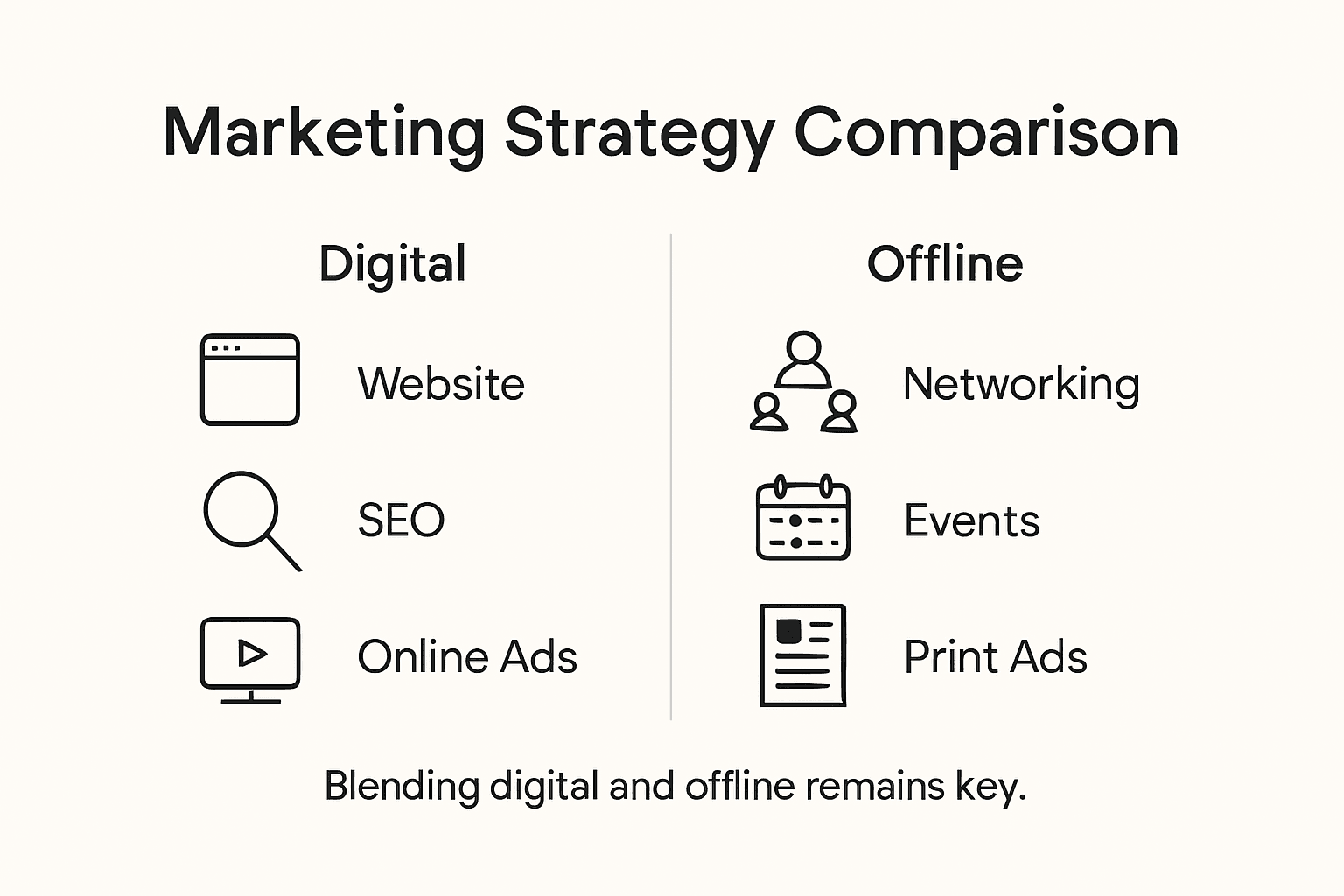
    Modern law firms cannot rely solely on online or offline approaches but must create integrated marketing systems that leverage multiple channels.

    Digital strategies now form the cornerstone of effective law firm marketing. This includes developing responsive websites optimized for mobile platforms, creating targeted content marketing campaigns, leveraging search engine optimization techniques, and maintaining active social media profiles that showcase professional expertise.

    Video content, interactive webinars, and robust online client communication tools have become essential for attracting and retaining clients.

    Traditional offline strategies remain critically important, complementing digital efforts. Networking at professional events, participating in community organizations, speaking at local conferences, and maintaining personal referral relationships continue to build trust and credibility.

    Small law firm marketing approaches emphasize the importance of balancing technological tools with genuine human connection and local community engagement.

    Pro Tip: Create a holistic marketing strategy that integrates digital platforms with personal networking, ensuring your firm appears both technologically sophisticated and authentically connected to client needs.

    Infographic comparing digital and offline marketing strategies

    Building Trust and Brand Authority Online

    Digital trust strategies have become paramount for law firms seeking to establish credibility in an increasingly competitive online landscape. Modern clients demand more than legal expertise they require transparency, technological competence, and a demonstrable commitment to protecting their sensitive information.

    Attorney checks law firm website for trust signals

    Establishing online brand authority requires a multifaceted approach. Law firms must produce high-quality content that showcases their legal knowledge, engage authentically with potential clients through social media platforms, and leverage client testimonials strategically. This means creating educational blog posts, hosting informative webinars, sharing insights on complex legal topics, and maintaining consistent professional messaging across all digital channels.

    Cybersecurity and data privacy have emerged as critical components of digital trust. Law firms must implement robust technological safeguards, clearly communicate their privacy policies, and demonstrate a proactive approach to protecting client information. This involves using secure communication platforms, regularly updating privacy protocols, and being transparent about data handling practices that instill confidence in potential clients.

    Pro Tip: Develop a comprehensive digital trust framework that combines expert content, transparent communication, and rigorous cybersecurity measures to differentiate your law firm in a competitive online marketplace.

    Leveraging AI and Automation for Growth

    AI technologies are fundamentally transforming legal service delivery in unprecedented ways. Law firms that strategically integrate artificial intelligence will gain significant competitive advantages, reimagining traditional workflows and creating more efficient, client-focused practices.

    AI-powered marketing tools enable law firms to revolutionize client acquisition and engagement strategies. These advanced platforms can automate repetitive marketing tasks, develop sophisticated client segmentation models, and personalize digital interactions at scale.

    By analyzing client data and behavioral patterns, AI systems help firms craft targeted marketing campaigns, predict client needs, and optimize lead generation processes with remarkable precision.

    The implementation of AI extends beyond marketing into core legal operations. Document automation, contract analysis, legal research, and predictive case outcome modeling represent critical areas where artificial intelligence can dramatically enhance productivity.

    Firms must invest in comprehensive AI training programs, ensuring their teams understand how to effectively collaborate with AI tools while maintaining the nuanced human expertise that remains essential in legal practice.

    Pro Tip: Develop a strategic AI integration roadmap that balances technological innovation with your firm’s unique human expertise, focusing on augmenting rather than replacing professional skills.

    The following table summarizes key AI-powered tools and their impact on law firm growth:

    AI Tool Main Function Value to Law Firm
    Client Segmentation Categorizes clients by needs Enables precise targeting
    Document Automation Generates legal documents Saves time and reduces errors
    Predictive Analytics Forecasts legal outcomes Improves strategy and planning
    Chatbots and Virtual Assistants Handles client queries Enhances responsiveness

    Mitigating Risks and Avoiding Common Pitfalls

    Risk management strategies are essential for law firms navigating the complex landscape of modern legal practice. Proactive identification and mitigation of potential risks across technological, financial, operational, and strategic domains can protect both the firm’s reputation and its long-term sustainability.

    Law firms must be particularly vigilant about marketing risks, which can quickly undermine professional credibility. Common pitfalls include inadequate marketing budgets, neglecting client communication, and failing to develop clear, comprehensive marketing strategies.

    Firms should prioritize compliance with legal advertising standards, continuously evaluate marketing return on investment, and maintain a transparent, ethical approach to client acquisition and engagement.

    Technological risks represent another critical area of concern. This includes protecting client data, ensuring cybersecurity, maintaining client confidentiality, and implementing robust digital infrastructure.

    Law firms must invest in comprehensive staff training, develop clear technological protocols, and regularly audit their systems to prevent potential breaches or technological vulnerabilities that could compromise client trust and firm operations.

    Pro Tip: Develop a comprehensive risk management framework that integrates technological, financial, and marketing safeguards, conducting regular audits and creating adaptive strategies to address emerging challenges.

    Elevate Your Law Firm Marketing Strategy for 2026

    At LawSmiths, we specialize in helping law firms navigate these exact challenges through tailored online marketing services. Our expertise in SEO web design digital advertising, and social media marketing can transform your firm’s online presence while generating quality leads across diverse fields like personal injury and family law.

    By combining strategic development with marketing execution, our agency helps you build credibility trust, and measurable growth with every campaign.

    Looking to turn your 2026 marketing goals into reality? Don’t wait to differentiate your practice and win more clients—start your journey with LawSmiths today by calling (833) 217-2991 for a free law firm marketing consultation.

    Frequently Asked Questions

    What are the key components of a successful law firm marketing strategy in 2026?

    A successful law firm marketing strategy in 2026 should integrate digital channels such as SEO, content marketing, targeted advertising, and social media engagement while balancing traditional strategies like personal networking and community involvement.

    How can law firms build trust and authority online?

    Law firms can build trust and authority by producing high-quality content, engaging authentically on social media, leveraging client testimonials, and ensuring robust cybersecurity measures to protect client data.

    What role does AI play in law firm marketing and operations?

    AI plays a crucial role in automating marketing tasks, personalizing client interactions, and enhancing core legal operations such as document automation, legal research, and predictive case outcome modeling, providing firms with significant competitive advantages.

    What risks should law firms be aware of in their marketing efforts?

    Law firms should be aware of marketing risks such as inadequate budgets, poor client communication, compliance with advertising standards, and potential cybersecurity threats that could undermine their reputation and client trust.

  • How to Calculate Your ROI on Personal Injury Leads Easily

    How to Calculate Your ROI on Personal Injury Leads Easily

    ROI on Personal Injury Leads: The Easiest Way to Calculate It in 2026

    Without clear insight into lead costs and ROI metrics, law firm partners risk wasting valuable marketing dollars on channels that fail to convert.

    This guide shows how American legal professionals can gather meaningful data, analyze the real performance of their digital campaigns, and make confident decisions that drive new cases and increase revenue.

    Step 1: Gather Lead Cost and Acquisition Data

    Calculating your personal injury lead ROI starts with precise data collection. You will systematically track every financial input and conversion metric related to your marketing campaigns to understand true lead performance.

    Begin by establishing a comprehensive tracking system for your marketing expenses. This means documenting all expenditures across digital channels like Google Ads, social media advertising, lead measurement and exposure tracking methods.

    Create a detailed spreadsheet that captures critical financial information including:

    • Total advertising spend per channel
    • Number of leads generated
    • Cost per lead
    • Conversion rate
    • Average case value
    • Marketing channel source

    Utilize analytics tools and tracking pixels to capture granular data about each lead source. Many law firms overlook the importance of precise tracking, but understanding exactly where your most valuable clients originate can dramatically improve future marketing investments.

    Connect your customer relationship management (CRM) system with your financial reporting tools to streamline data collection. This integration allows automatic logging of lead acquisition costs and helps you generate real time ROI calculations without manual intervention.

    Pro tip: Set up automatic monthly reports that break down lead acquisition costs by specific marketing channel to quickly identify your most profitable marketing strategies.

    Here’s a summary of key data metrics and their strategic business impact for personal injury lead tracking:

    Data Metric What It Measures Business Impact
    Advertising Spend Total amount spent on campaigns Reveals cost efficiency
    Number of Leads Quantity of prospects acquired Assesses campaign reach
    Cost per Lead Price to secure a single lead Helps budget and predict ROI
    Conversion Rate Proportion of leads becoming clients Tracks success in client intake
    Average Case Value Typical revenue from each client Guides resource allocation
    Marketing Channel Source Origin of each lead Identifies top-performing sources

    Step 2: Determine Lead Conversion Rate

    Calculating your lead conversion rate is crucial for understanding the effectiveness of your personal injury marketing strategies and determining the true value of your lead generation efforts. In this step, you will learn how to precisely measure the percentage of potential leads that transform into actual clients.

    Start by tracking industry incidence rates and case conversion metrics across your entire lead acquisition process. Calculate your conversion rate by dividing the number of signed clients by the total number of leads generated within a specific time period.

    For personal injury law firms, this typically involves monitoring:

    • Total leads received
    • Initial consultations scheduled
    • Consultations converted to signed cases
    • Total cases resolved or settled

    Use your customer relationship management (CRM) system to help automate this tracking. Most advanced CRM platforms can generate reports that show conversion rates at different stages of your client acquisition funnel, providing granular insights into your marketing performance.

    Another critical factor is understanding the quality of your leads. Not all leads are equal some will have higher potential case values or higher likelihood of conversion.

    Segment your leads by source, type of injury, and potential case value to refine your marketing strategies and focus on channels that produce the most valuable clients.

    Pro tip: Track your conversion rates monthly and create benchmark comparisons to identify trends and optimize your lead generation strategies.

    Step 3: Calculate Average Value Per Client

    Understanding the financial potential of your personal injury leads requires a precise calculation of your average client value. This critical metric helps you determine the true return on investment for your marketing efforts and identify the most profitable types of cases.

    Begin by analyzing your historical case data to develop a comprehensive picture of client values. Use comprehensive settlement calculation methods that account for multiple financial components. Your average client value calculation should include:

    • Total case settlement amounts
    • Medical expense reimbursements
    • Lost wage compensation
    • Pain and suffering damages
    • Legal fees collected
    • Case resolution time

    Review median jury awards and settlement statistics specific to different types of personal injury cases. This will help you understand how your firm’s performance compares to industry benchmarks and identify potential areas for improvement in case selection and client representation.

    Segment your client value calculations by case type injury category and referral source. This granular approach allows you to understand which marketing channels and practice areas generate the most valuable clients.

    Some personal injury categories like medical malpractice or workplace accidents might consistently yield higher average client values compared to others.

    Pro tip: Update your average client value calculations quarterly to maintain an accurate understanding of your firms financial performance and marketing effectiveness.

    Step 4: Compute Total Revenue from Leads

    Calculating your total revenue from personal injury leads requires a comprehensive approach that goes beyond simple case settlement figures. You will develop a nuanced financial analysis that captures the full economic impact of your marketing efforts and client acquisition strategies.

    Begin by utilizing comprehensive injury cost estimation tools that help you understand the full financial landscape of your leads. Your total revenue computation should incorporate multiple revenue streams, including:

    • Gross case settlement amounts
    • Contingency fee percentages
    • Referral fees from associated cases
    • Potential future case value from client referrals
    • Indirect revenue from professional reputation enhancement

    Review comprehensive injury data and statistical trends to contextualize your revenue calculations. This approach allows you to understand how your firm’s financial performance aligns with broader industry metrics and helps identify potential growth opportunities in specific practice areas or injury types.

    Implement a robust tracking system that captures both direct and indirect revenue sources. Some revenue streams might not be immediately apparent but can significantly impact your long term financial performance. For instance, a satisfied client might generate additional referrals or lead to repeat business in the future.

    Pro tip: Create a dynamic spreadsheet that automatically updates your total revenue calculations as new case data becomes available, allowing for real time financial insights.

    Step 5: Assess Net Profit and ROI Metrics

    Measuring the financial performance of your personal injury lead generation efforts requires a systematic approach to calculating net profit and return on investment. You will learn how to transform raw financial data into meaningful insights that guide your marketing strategy and business growth.

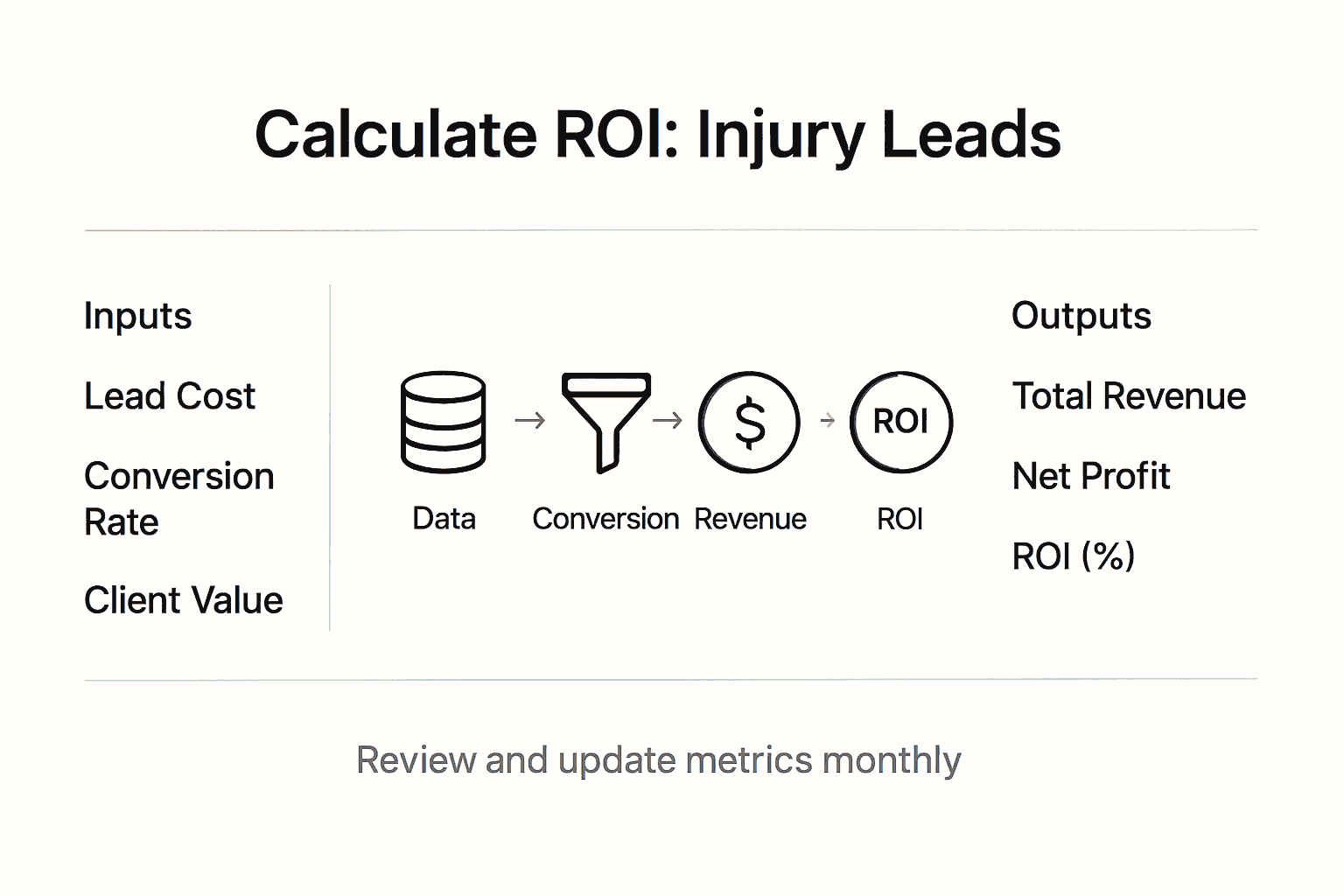
    Start by understanding the fundamental principles of return on investment calculation methods, which help you evaluate the profitability of your marketing expenditures. Use comprehensive cost estimation tools to develop a detailed financial analysis that includes:

    • Total marketing expenses
    • Gross revenue generated from leads
    • Direct and indirect costs associated with case acquisition
    • Operational overhead
    • Net profit per lead source

    Calculate your ROI using the standard formula: ROI percentage equals net profit divided by total investment multiplied by 100. This will provide a clear percentage that represents your marketing effectiveness.

    Pay special attention to breaking down your calculations by specific marketing channels, allowing you to identify the most cost effective lead generation strategies.

    Infographic showing ROI steps for injury leads

    Segment your ROI analysis by practice area, lead source, and marketing campaign to gain granular insights. Some marketing channels might produce higher quality leads with better conversion rates, even if their initial cost per lead appears higher. Your goal is to understand the nuanced financial performance across different marketing approaches.

    Pro tip: Create a standardized ROI dashboard that automatically updates your key financial metrics, enabling quick performance assessments and strategic decision making.

    Below is a comparison highlighting the financial analysis focus at different stages of personal injury ROI calculation:

    Step Main Calculation Focus Example Segment for Deeper Insight
    Lead Conversion Rate Tracks client acquisition ratios By injury type or referral source
    Average Value Per Client Measures client revenue By practice area or case category
    Total Revenue from Leads Sums all direct and indirect income By lead origin or reputation metrics
    Net Profit & ROI Determines overall profitability By marketing channel or operational cost

    Maximize Your Personal Injury Lead ROI with Expert Digital Marketing

    Tracking your cost per lead conversion rate and calculating your average client value can be complex and time consuming. Law firms often struggle to gather precise lead acquisition data and accurately measure marketing effectiveness. If you want to gain deeper insights into which channels generate your most valuable clients and boost your net profit and ROI metrics, expert assistance is key.

    At LawSmiths, we specialize in helping personal injury attorneys translate detailed data into actionable marketing strategies. With over 25 years of experience in SEO, PPC, content creation, and workflow optimization, we tailor digital marketing solutions that improve your online visibility and generate quality leads that convert.

    Ready to take control of your personal injury lead ROI and grow your practice fast? Call us at (833) 217-2991 to schedule a free personalized strategy consultation and start turning your lead data into measurable profits.

    Frequently Asked Questions

    How do I gather lead cost and acquisition data?

    To gather lead cost and acquisition data, start by documenting all your marketing expenses across various channels, including digital ads and social media spending. Create a detailed spreadsheet to track metrics like total advertising spend, number of leads generated, and cost per lead to gain a clear picture of your lead performance.

    What is the best way to calculate my lead conversion rate?

    You can calculate your lead conversion rate by dividing the number of signed clients by the total number of leads generated during a specific time period. For accurate tracking, use your customer relationship management (CRM) system to automate data collection and generate monthly reports on your conversion rates.

    How can I determine my average client value?

    To determine your average client value, analyze your historical case data, including settlement amounts and any associated costs. Calculate the average by listing all revenue components from completed cases, and update this data quarterly to reflect any changes in financial performance.

    What should I include in my total revenue calculation from leads?

    Your total revenue calculation from leads should include gross case settlement amounts, potential future referrals, and any associated fees. Make sure to account for both direct and indirect revenue streams to fully assess the impact of your marketing efforts.

    How do I assess net profit and ROI metrics for my marketing efforts?

    Assess your net profit and return on investment by subtracting total marketing expenses from the gross revenue generated from leads and dividing by total investment. Regularly segment your analysis by practice area and marketing channels to identify which strategies yield the highest returns.

  • How Reviews Impact Law Firms’ Client Growth

    How Reviews Impact Law Firms’ Client Growth

    Why Online Reviews Are Key to Your Law Firm’s Growth

    With so many people turning to digital platforms to judge credibility, managing partners at mid-sized personal injury firms face an urgent challenge.

    Knowing how to optimize and manage online reviews can help American law practices stand out, attract more clients, and build lasting reputations rooted in genuine client satisfaction.

    Understanding Online Reviews for Law Firms

    Online reviews have become a critical factor in determining a law firm’s success in attracting potential clients. Prospective legal clients increasingly rely on digital testimonials and ratings to evaluate the credibility and performance of law firms before making representation decisions.

    According to FTC guidelines on consumer reviews, these digital recommendations provide crucial insights into a firm’s reputation and client satisfaction.

    Reviews serve multiple strategic purposes for law firms. They function as social proof, allowing potential clients to gauge a firm’s expertise, communication skills, case success rates, and overall client experience.

    Positive reviews can significantly influence a potential client’s decision to schedule a consultation, while negative reviews can deter prospects from engaging legal services.

    The Federal Trade Commission emphasizes the importance of authentic, transparent reviews that accurately reflect genuine client experiences.

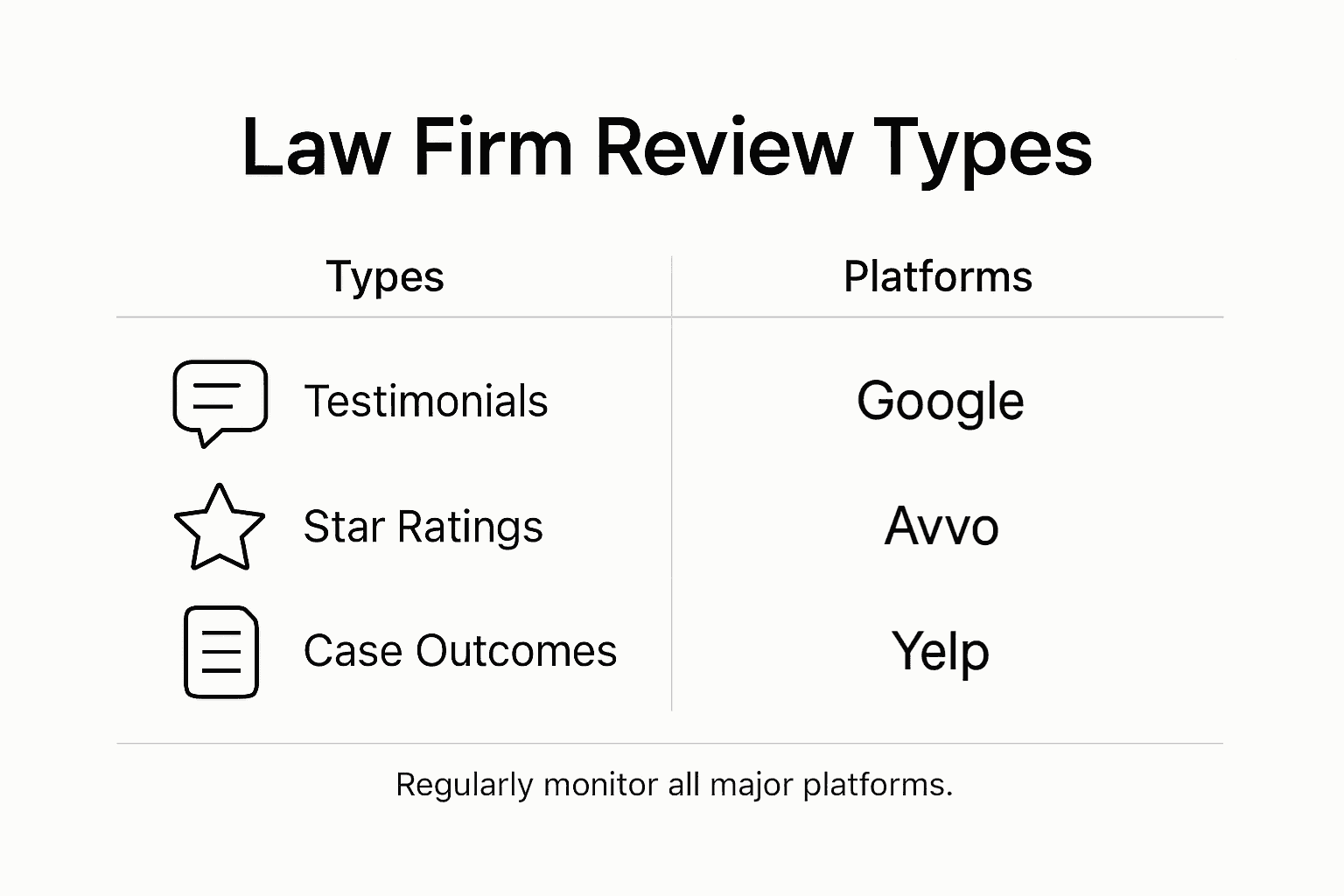
    The digital landscape of legal reviews involves multiple platforms, including Google Business Profile, Avvo, Yelp, and specialized legal directories.

    Each platform offers unique opportunities for law firms to showcase client testimonials and build digital credibility. Law firms must actively manage their online reputation by encouraging satisfied clients to share their experiences, promptly addressing negative feedback, and maintaining a consistent, professional online presence.

    Law firm reputation management strategies can help firms effectively navigate these digital review ecosystems.

    Pro tip: Implement a systematic approach to requesting client reviews immediately after successful case resolutions, ensuring timely and authentic feedback collection.

    Types of Reviews and Key Platforms

    Law firms encounter diverse review platforms that offer unique opportunities for showcasing client experiences and professional reputation.

    Legal review platforms range from specialized legal directories to general consumer review sites, each providing distinct mechanisms for client feedback and professional evaluation. These platforms include professional networks like Avvo, general review sites such as Google Business Profile, and industry-specific directories like Martindale-Hubbell.

    The primary types of reviews for law firms can be categorized into several key classifications. Client Testimonials represent direct narrative feedback from individuals who have experienced the firm’s services, typically featuring detailed accounts of case outcomes and personal interactions.

    Star Ratings provide quick visual representations of overall satisfaction, allowing potential clients to quickly assess a firm’s performance.

    Peer Reviews offer professional evaluations from other attorneys, which can be particularly valuable in demonstrating professional credibility and expertise.

    Infographic of law firm review types and platforms

    Each review platform has specific characteristics that law firms must understand to maximize their digital reputation. Google Business Profile offers broad visibility and impacts local search results, while Avvo provides detailed attorney profiles with specialized legal ratings.

    Yelp focuses on consumer experience, and industry-specific platforms like Martindale-Hubbell emphasize professional credentials and peer recommendations.

    Understanding the nuanced differences between these platforms allows law firms to develop targeted strategies for managing their online presence effectively.

    Here’s a comparison of major law firm review platforms and their unique advantages:

    Platform Audience Reach Distinct Feature Typical Review Content
    Google Business Very High Impacts local search results Public ratings, brief text
    Avvo Legal professionals Detailed profiles and ratings Attorney expertise, cases
    Yelp General consumers Focus on user experience Service quality
    Martindale-Hubbell Legal industry Peer and client reviews Ethics, credentials

    Pro tip: Develop a comprehensive review management strategy that includes monitoring multiple platforms and creating a systematic approach to encouraging authentic client feedback.

    Effects on Client Trust and Firm Reputation

    Online reviews play a pivotal role in shaping client trust and a law firm’s professional reputation.

    When potential clients encounter detailed, genuine reviews, they develop a more nuanced understanding of a firm’s capabilities, communication style, and track record of success.

    The impact of reviews extends beyond mere ratings. Potential clients analyze the depth, consistency, and specificity of testimonials to evaluate a law firm’s expertise. Detailed reviews that describe specific case outcomes, attorney responsiveness, and client experiences provide social proof that can be more persuasive than traditional marketing materials.

    Conversely, negative or fabricated reviews can rapidly erode trust, potentially deterring prospective clients from engaging a law firm’s services.

    Law firms must recognize that modern clients view online reviews as a critical component of their decision-making process. Ethical review management involves not just collecting positive feedback, but maintaining transparency, addressing negative reviews constructively, and demonstrating a commitment to client satisfaction.

    The Federal Trade Commission emphasizes the importance of genuine, unmanipulated reviews that accurately represent client experiences, highlighting the need for authentic digital reputation management.

    Pro tip: Implement a proactive review collection process that encourages satisfied clients to share detailed, honest feedback while maintaining strict ethical standards.

    How Reviews Influence Local SEO Rankings

    Local search engine optimization represents a critical strategy for law firms seeking to improve their digital visibility in geographic markets. Reviews serve as a powerful signal to search engines, directly impacting a firm’s local search rankings and online discoverability.

    Google’s algorithm considers review quantity, quality, recency, and diversity when determining a law firm’s placement in local search results, making them a fundamental component of digital marketing strategy.

    The mechanics of review influence on local SEO are nuanced and multifaceted. Positive reviews contribute to improved Google My Business rankings by demonstrating client satisfaction and engagement. Search engines interpret multiple high-quality reviews as indicators of credibility, relevance, and trustworthiness.

    Law firms with consistent, detailed reviews that include location-specific keywords can significantly enhance their chances of appearing in the coveted Local Pack – the top three local business listings displayed in search results.

    Beyond numerical rankings, reviews offer qualitative signals that search algorithms consider. Detailed reviews mentioning specific practice areas, case types, and local geographic references provide contextual relevance that improves organic search performance. Law firms should encourage clients to write comprehensive reviews that naturally incorporate location-based terms and specific legal service descriptions.

    Understanding search engine ranking factors can help firms strategically optimize their review collection and management processes.

    Summary of how online reviews influence law firm outcomes:

    Review Factor Impact on Law Firm Search Engine Effect
    Quantity of Reviews Increases client trust Boosts local rankings
    Review Detail Shows expertise Improves relevance
    Recency Signals active practice Favors ranking freshness
    Location Keywords Enhances local credibility Optimizes location SEO

    Pro tip: Develop a systematic approach to collecting client reviews that emphasizes detailed, location-specific feedback while maintaining ethical standards of authenticity.

    Managing Negative Feedback and Compliance

    Federal Trade Commission regulations establish critical guidelines for law firms managing online reviews, emphasizing the importance of transparent and ethical feedback practices. Negative reviews represent an opportunity for professional growth and client relationship management, rather than a threat to be suppressed.

    Law firms must develop a strategic approach that addresses critical feedback constructively while maintaining legal and ethical standards.

    Responding to negative reviews requires a nuanced, professional strategy. Each negative review should be approached as a chance to demonstrate the firm’s commitment to client satisfaction and continuous improvement.

    Transparent communication is key, involving a measured response that acknowledges the client’s concerns, offers to address specific issues, and demonstrates the firm’s dedication to resolving potential misunderstandings. Professional responses can potentially transform a negative experience into a positive perception of the firm’s client service approach.

    Comprehensive review management involves more than just responding to individual feedback. Law firms must implement systemic processes that prevent review manipulation, ensure compliance with FTC guidelines, and maintain the integrity of their online reputation.

    This includes establishing clear protocols for requesting reviews, training staff on appropriate response techniques, and developing a consistent approach to addressing both positive and negative client feedback. The goal is to create a transparent, honest representation of the firm’s client experiences that builds trust and credibility.

    Pro tip: Create a standardized internal protocol for reviewing and responding to client feedback that emphasizes empathy, professionalism, and a genuine commitment to client satisfaction.

    Boost Your Law Firm’s Growth with Strategic Review Management

    The challenge many legal practices face is turning authentic client feedback into a powerful marketing asset while navigating negative reviews ethically. Many firms struggle to implement a systematic review collection and response strategy that enhances visibility and attracts quality leads in competitive markets.

    At LawSmiths, we understand the critical role reviews play in shaping your firm’s digital presence. Our full-service digital marketing solutions are designed specifically for law firms ready to leverage authentic client feedback to improve search rankings, build trust, and convert prospects into clients.

    Whether you want to optimize your local SEO strategy or develop a consistent approach to managing online reviews, our expertise in SEO, web design, and reputation management ensures your firm stands out.

    Call (833) 217-2991 for a free law firm reputation management consultation and take the first step toward elevating your law firm’s digital influence and client acquisition.

    Frequently Asked Questions

    How do online reviews influence a law firm’s reputation?

    Online reviews serve as social proof, allowing potential clients to gauge a law firm’s expertise, communication skills, and overall client experience. Positive reviews can enhance credibility, while negative reviews may deter prospects.

    What types of reviews are most impactful for law firms?

    Key types of impactful reviews include client testimonials that detail personal experiences, star ratings that provide a quick visual assessment of satisfaction, and peer reviews from other attorneys that affirm professional credibility.

    How can law firms effectively manage their online reviews?

    Law firms can effectively manage their online reviews by encouraging satisfied clients to leave feedback, promptly addressing negative reviews, and maintaining a consistent online presence across multiple platforms.

    Why are client reviews important for local SEO rankings?

    Client reviews are crucial for local SEO as they signal trust and engagement to search engines. Factors such as review quantity, quality, and recency directly influence a firm’s placement in local search results, impacting online discoverability.

  • Personal Injury Lawyer Advertising Campaigns: Best Practices That Convert Leads

    Personal Injury Lawyer Advertising Campaigns: Best Practices That Convert Leads

    The Ultimate Guide to Personal Injury Lawyer Advertising That Converts Leads to Won Cases

    Knowing how to target the right audience and position your offer is crucial for improving results.

    This guide reveals proven strategies for personal injury attorneys to segment potential clients, track campaign success, craft high-converting ad creatives, and validate lead quality so every advertising dollar drives more meaningful conversions.

    Step 1: Define Audience Targeting and Offer Positioning

    Creating an effective personal injury lawyer marketing strategy starts with understanding how to precisely segment and target potential clients. Audience segmentation involves dividing your customer base into smaller groups with shared characteristics to deliver more personalized and compelling marketing messages.

    The STP marketing model becomes crucial in this process. By implementing Segmentation, Targeting, and Positioning strategies, law firms can identify key customer segments and choose which audiences to focus their marketing efforts on.

    For personal injury lawyers, this means breaking down potential clients into meaningful groups based on specific characteristics like injury type, demographic factors, geographic location, and potential case complexity.

    Start by analyzing your current client database and identifying common patterns. Look for shared attributes such as age ranges, income levels, typical injury scenarios, and legal needs. This detailed analysis helps you create laser focused marketing messages that speak directly to each specific segment. Your goal is to position your legal services as the most relevant and compelling solution for each distinct group of potential clients.

    Pro tip: Create detailed client persona profiles that capture the specific pain points, motivations, and communication preferences for each audience segment to craft more targeted and effective marketing campaigns.

    Here’s a summary of essential audience segments for personal injury law firms:

    Segment Type Key Characteristics Marketing Message Focus
    Injury Type Car, workplace, slip & fall Injury expertise, case results
    Demographic Factors Age, income, occupation Empathy, tailored communication
    Geographic Location City, region, ZIP code Local presence, fast response
    Case Complexity Simple vs. complex claims Legal strategy, proven outcomes

    Step 2: Set up campaign tracking and lead attribution tools

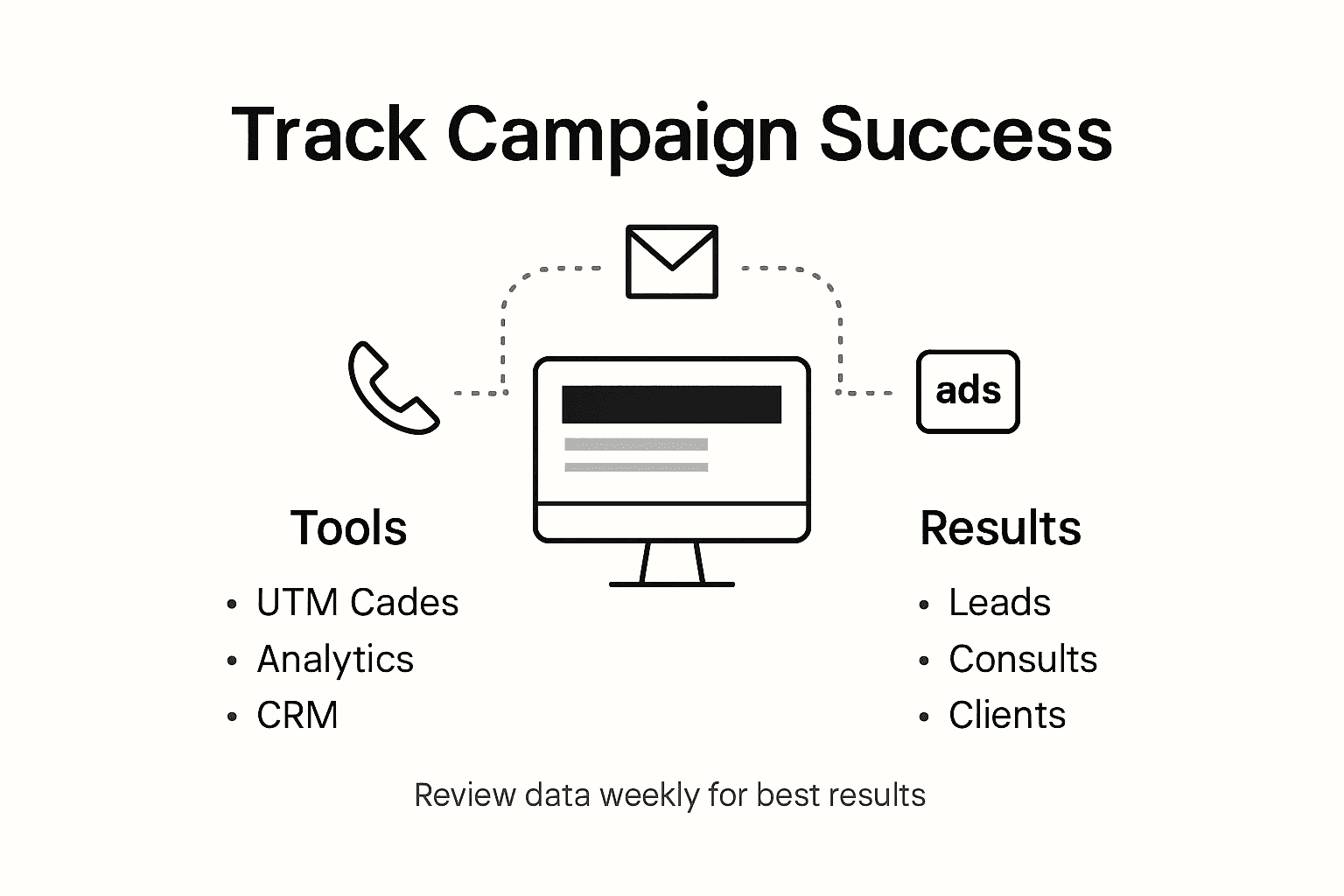
    Marketing attribution software offers personal injury law firms a powerful way to understand exactly how potential clients discover and engage with their services. These advanced tracking tools go beyond simplistic measurement approaches by mapping complex client journeys across multiple digital touchpoints.

    Attribution tracking integrates data from digital ads, emails, and social media to provide a comprehensive view of lead generation performance.

    Start by selecting an analytics platform that allows multi-channel tracking and supports detailed conversion path analysis. Configure the tool to track specific interactions like website visits, form submissions, phone calls, and consultation requests.

    Infographic explaining campaign tracking steps

    Implement unique tracking parameters for each marketing channel. This means creating specific UTM codes for your Google Ads, social media campaigns, email marketing efforts, and referral sources.

    By implementing granular tracking, you can pinpoint which specific ads, keywords, or content pieces are generating the most qualified leads for your personal injury practice.

    Pro tip: Set up conversion goals that capture not just initial contact but the entire client acquisition process to gain deeper insights into your marketing funnel’s true performance.

    Step 3: Launch optimized ad creatives and landing pages

    Personal injury law firms can create powerful marketing campaigns by developing highly targeted ad creatives and landing pages that speak directly to potential clients’ specific needs and emotional experiences.

    The goal is to craft messaging that resonates with individuals who are experiencing significant personal challenges and seeking legal representation.


    Compelling legal marketing requires strategic design elements that communicate professionalism, empathy, and expertise. Your ad creatives should feature clear headlines that address specific injury types or legal scenarios, using language that demonstrates understanding of the client’s potential pain points.

    Develop landing pages with streamlined designs that include social proof elements like client testimonials, case success statistics, and professional credentials.

    Focus on creating a seamless user experience that guides potential clients from initial ad click to consultation request. This means designing landing pages with intuitive navigation, mobile responsive layouts, and prominent contact forms.

    Implement trust signals such as bar association memberships, legal awards, and verified client reviews to increase conversion rates and reduce potential client hesitation.

    Pro tip: Create multiple ad variations and landing page designs to conduct ongoing A/B testing, allowing you to continuously optimize your marketing materials based on real performance data.

    Step 4: Monitor campaign metrics and adjust for performance

    Marketing analytics provides personal injury law firms with critical insights into campaign effectiveness by tracking comprehensive performance metrics. Understanding how to collect and interpret these metrics allows you to make data driven decisions that continuously improve your lead generation strategy.

    Effective campaign monitoring requires distinguishing between outputs and meaningful outcomes that directly impact your law firm’s growth.

    Focus on key performance indicators like:

    • conversion rates,
    • cost per lead,
    • click-through rates,
    • and consultation booking percentages.

    Set up automated reporting dashboards that allow you to quickly assess which marketing channels and ad variations are delivering the highest quality potential clients.

    Implement a systematic review process where you analyze campaign data weekly and make incremental adjustments. This might involve reallocating budget from underperforming channels, refining audience targeting parameters, or updating ad creative messaging based on actual performance data.

    Create benchmarks for acceptable performance metrics and be prepared to pivot quickly when your campaigns are not meeting established goals.

    Pro tip: Create a standardized monthly performance review template that compares current metrics against historical data and industry benchmarks to ensure consistent strategic optimization.

    Below is a quick reference for key performance indicators to monitor marketing effectiveness:

    KPI What It Measures Why It Matters
    Conversion Rate Inquiries to clients ratio Reveals funnel efficiency
    Cost Per Lead Spending per qualified lead Indicates campaign cost-effectiveness
    Consultation Booking Rate Consults scheduled per lead Shows lead quality and engagement
    Average Case Value Value from each conversion Assesses channel revenue impact

    Step 5: Validate lead quality and measure conversion outcomes

    Lead validation is a critical process that helps personal injury law firms distinguish genuine prospects from low potential inquiries. This strategic approach ensures that your marketing efforts focus on generating actionable leads with the highest probability of converting into actual client relationships.

    Rigorous lead qualification requires developing comprehensive assessment criteria that evaluate multiple dimensions of potential client interactions.

    Implement a systematic scoring mechanism that considers factors like case viability, injury severity, potential settlement value, client communication responsiveness, and alignment with your firm’s practice specialties.

    Create a standardized intake questionnaire and initial screening process that allows your team to quickly categorize and prioritize incoming leads.

    Establish clear conversion tracking mechanisms that go beyond simple contact form submissions. Monitor the entire client acquisition journey from initial inquiry to consultation booking and ultimately to case retention.

    Calculate key performance indicators such as lead to consultation conversion rates, consultation to case acceptance percentages, and average case value per marketing channel. This data driven approach will help you continuously refine your marketing strategies and allocate resources more effectively.

    Pro tip: Develop an internal lead scoring matrix that assigns weighted values to different lead characteristics, enabling your team to quickly identify and fast track the most promising potential client opportunities.

    Unlock Powerful Personal Injury Lawyer Advertising with Expert Digital Marketing

    If you are facing challenges like optimizing audience targeting, tracking lead sources, or crafting compelling ad creatives as outlined in “Personal Injury Lawyer Advertising Campaigns Best Practices That Convert Leads” you are not alone.

    Many personal injury law firms struggle to pinpoint exactly which marketing strategies deliver the highest quality leads and real client conversions. Pain points such as understanding complex attribution data and continuously refining campaign performance demand expert handling.

    At LawSmiths we specialize in helping personal injury lawyers overcome these challenges through tailored digital marketing solutions. With over 25 years of experience in SEO web design and digital advertising we empower your firm to attract the right clients with precision targeting and persuasive messaging.

    Take control of your campaigns today and connect with our experts to create a custom roadmap for your personal injury practice success. Call (833) 217-2991 now to schedule a free advertising campaign consultation.

    Frequently Asked Questions

    How can I define my target audience for personal injury lawyer advertising campaigns?

    To define your target audience, segment potential clients by characteristics like injury type, demographics, and geographic location. Analyze your current client base to identify common patterns and create detailed client personas that reflect their pain points and needs.

    What are effective ways to track the success of my personal injury lawyer advertising campaigns?

    Utilize marketing attribution tools to monitor multiple digital touchpoints, such as website visits and consultation requests. Implement unique tracking parameters for each marketing channel to gain detailed insights into which avenues generate the most qualified leads.

    How do I optimize my ad creatives and landing pages for personal injury law campaigns?

    Craft ad creatives that directly address the specific needs and emotions of potential clients, focusing on empathy and expertise. Design landing pages to provide a seamless user experience with clear communication, intuitive navigation, and prominent contact forms, aiming to reduce bounce rates by 20%.

    What key performance indicators should I monitor for my personal injury advertising efforts?

    Monitor key performance indicators like conversion rates, cost per lead, and consultation booking percentages to assess campaign effectiveness. Set up automated dashboards to track these metrics weekly, enabling you to make timely adjustments for better performance.

    How can I validate lead quality for my personal injury law firm?

    Develop a lead scoring system that evaluates the viability of potential clients based on factors like injury severity and case complexity. Create a standardized intake process to prioritize leads with the highest conversion potential, aiming to improve consultation rates within 30 days.


  • Getting High-Value Car Accident Leads for Your Law Firm

    Getting High-Value Car Accident Leads for Your Law Firm

    Strategies to Get High-Value Car Accident Leads for Law Firms in 2026

    Standing out means knowing exactly which cases drive your profitability and how to capture the attention of the clients you want most.

    This guide shares proven strategies for defining your ideal car accident client, optimizing your website, running targeted ad campaigns, and using local SEO—all aimed at helping your practice secure quality leads and outperform competitors.

    Step 1: Define Your Ideal Car Accident Client Profile

    Successfully attracting high-value car accident leads starts with understanding precisely who your most profitable clients are. By creating a detailed client profile, your law firm can strategically target and attract the most promising potential cases that align with your expertise and business goals.

    Defining your ideal client requires a systematic approach that goes beyond basic demographics. Legal professionals must analyze client interviewing techniques to uncover nuanced characteristics that signal a high-value case.

    This means looking beyond surface-level details and examining factors such as injury severity, potential long-term medical implications, liability complexity, and insurance coverage scenarios.

    Paralegal updating client profile spreadsheet

    A comprehensive client profile should include specific parameters like:

    • typical accident types (rear-end collisions, intersection accidents, highway incidents),
    • injury ranges (soft tissue damage, fractures, permanent disabilities),
    • potential case value thresholds,
    • and geographic regions where your firm has proven success.

    Consider documenting details such as average medical expenses, lost wage potential, and typical insurance company responses for your target client segment.

    Pro tip: Create a detailed client profile spreadsheet with specific case characteristics to help your intake team quickly assess and prioritize incoming leads.

    Here’s a summary of key attributes for an ideal car accident client profile:

    Attribute Example Criteria Business Impact
    Accident Type Rear-end, intersection Targets likely strong cases
    Injury Severity Fractures, disabilities Higher potential compensation
    Case Value Threshold >$25,000 estimated damages Focuses firm resources
    Geographic Region Within firm’s top counties Improves win rate and relevance

    Step 2: Optimize Your Website for Targeted Lead Capture

    Transforming your law firm’s website into a powerful lead generation machine requires strategic optimization that attracts and converts potential car accident clients. Your digital presence must be designed to capture attention and guide prospective clients seamlessly through their initial research and decision making process.

    Successful website optimization starts with implementing user-centered design strategies that prioritize ease of navigation and clear communication. This means creating a clean, professional layout with intuitive menus, prominent contact information, and compelling content that speaks directly to car accident victims.

    Your website should quickly communicate your expertise through targeted service descriptions, client testimonials, and clear explanations of how you can help accident victims recover compensation.

    Infographic web lead optimization essentials boosts

    Performance is equally critical in capturing leads. A fast loading website with mobile responsiveness can significantly reduce bounce rates and increase user engagement.

    Focus on streamlining your site’s technical elements such as image compression, efficient code structure, and responsive design that adapts seamlessly across different devices. Include strategic call to action buttons, easy to complete contact forms, and clear pathways for potential clients to reach out and schedule initial consultations.

    Pro tip: Implement heat mapping and user tracking tools to understand exactly how potential clients interact with your website and continuously refine your lead capture strategies.

    Step 3: Launch Strategic Paid Advertising Campaigns

    Driving high value car accident leads requires a sophisticated approach to paid advertising that goes beyond traditional marketing techniques. Your campaign must strategically target potential clients at the precise moment they are seeking legal representation after an accident.

    Legal advertising strategies demand careful planning across multiple digital platforms to maximize visibility and engagement. This means developing targeted pay per click campaigns on Google and Bing, creating compelling display ads that resonate with car accident victims, and leveraging social media platforms to reach potential clients through precise demographic and geographic targeting.

    Your ad copy should address the immediate concerns of accident victims addressing pain points like medical expenses, lost wages, and legal complexity while positioning your firm as the most compassionate and competent solution.

    Successful paid advertising requires continuous optimization and data driven decision making. Implement robust tracking mechanisms to monitor key performance indicators such as click through rates, conversion costs, and lead quality.

    Regularly analyze your campaign metrics to refine targeting parameters, adjust ad messaging, and redistribute budget toward the most effective channels.

    Consider using a mix of search ads, display ads, and retargeting strategies to create a comprehensive approach that captures potential clients at different stages of their legal research process.

    Pro tip: Create multiple ad variations and use A B testing to systematically identify which messaging and visual elements generate the highest quality leads for your car accident practice.

    Compare core digital channels for car accident lead generation:

    Channel Targeting Precision Lead Quality Potential Best Use Case
    PPC Search Ads High (keyword + location) Very strong Immediate intent cases
    Display Ads Moderate (demographic) Moderate Brand awareness campaigns
    Social Media Ads Custom (demographic + geo) Varies by platform Niche audience targeting

    Step 4: Leverage Local SEO and Google Business Profile

    Attacking your local market requires a strategic approach to online visibility that puts your law firm directly in front of potential car accident clients searching for legal representation in your area. Your digital presence must be precisely tuned to capture local search traffic and demonstrate your regional expertise.

    Local SEO strategies are critical for law firms wanting to dominate their regional market. This means optimizing your website with location specific keywords, creating content that addresses local car accident trends, and ensuring your online listings are consistent across all platforms.

    Your Google Business Profile becomes a critical tool in this process, serving as a digital storefront that showcases your firm’s credibility, availability, and proximity to potential clients.

    Focus on completing every section of your profile with accurate information, uploading professional photos of your team and office, and actively managing client reviews to build trust and improve search rankings.

    Successful local SEO requires ongoing maintenance and strategic optimization. Regularly update your Google Business Profile with current information, respond to all client reviews professionally, and create localized content that demonstrates your understanding of regional legal challenges.

    Implement location specific schema markup on your website, develop location pages for each service area, and ensure your contact information is consistent across all online directories. These tactical approaches will help your law firm become the go to resource for car accident victims in your specific geographic market.

    Pro tip: Create a systematic review management process that encourages satisfied clients to share their positive experiences and promptly addresses any negative feedback to maintain an exceptional online reputation.

    Step 5: Verify Lead Quality and Refine Your Strategy

    Transforming raw lead data into valuable client opportunities requires a systematic approach that separates high potential cases from low yield prospects. Your law firm must develop a rigorous screening process that efficiently evaluates each potential car accident lead with precision and strategic insight.

    Crash investigation and reporting guidelines provide a critical framework for verifying lead authenticity and potential value. Implement a multistage verification process that examines key indicators such as accident details, injury severity, potential liability, insurance coverage, and documented medical evidence.

    Create a standardized intake questionnaire that captures comprehensive information, enabling your team to quickly assess each lead’s viability and potential case strength.

    Develop scoring criteria that rank leads based on factors like estimated damages, clear liability, serious injury documentation, and alignment with your firm’s specialization in car accident cases.

    Successful lead verification demands continuous refinement of your screening methodology. Establish a feedback loop where your intake team regularly reviews rejected and accepted leads to understand patterns and improve selection criteria.

    Track key performance metrics such as conversion rates, average case value, and time invested per lead to optimize your marketing and intake strategies.

    Use advanced customer relationship management tools to log detailed lead information, enabling data driven decision making and identifying the most effective lead generation channels for your practice.

    Pro tip: Develop a sophisticated lead scoring algorithm that automatically ranks incoming leads based on predefined criteria, saving your team valuable time and focusing efforts on the most promising potential clients.

    Boost Your Law Firm’s Success by Capturing High-Value Car Accident Leads

    If you are struggling to attract the right car accident clients or want to improve your lead quality and conversion rates the challenges outlined in “Getting High-Value Car Accident Leads for Your Law Firm” are clear.

    From defining your ideal client profile and optimizing your website to launching targeted paid advertising campaigns and leveraging local SEO you need a comprehensive strategy that delivers results. The emotional stress of losing promising clients due to unclear messaging or weak digital presence can be overwhelming.

    With over 25 years of experience our services focus on building your optimized, fast-loading website, managing PPC and social media campaigns that reach your exact audience, and enhancing your Google Business Profile to dominate local search results.

    Our team’s data-driven approach also helps you refine lead quality verification processes to maximize conversion while saving valuable time.

    Call LawSmiths today at (833) 217-2991 to schedule a free high-value accident leads consultation and take the next step toward transforming your legal practice into a leading authority in car accident cases.

    Frequently Asked Questions

    How can I define my ideal car accident client profile?

    To define your ideal car accident client profile, analyze your past cases and identify key attributes that represent your most profitable clients. Create a comprehensive profile that includes accident types, injury severity, case value thresholds, and demographic details to guide your marketing efforts.

    What steps can I take to optimize my law firm’s website for lead capture?

    Start by designing a user-friendly layout that prioritizes clear communication and easy navigation. Include compelling content about your services, prominent contact information, and quick-loading pages to enhance user engagement and capture more incoming leads.

    How should I structure my paid advertising campaigns for car accident leads?

    Focus on targeting specific keywords and demographics through pay-per-click ads and compelling display campaigns. Create multiple ad variations and continually optimize your messaging by analyzing performance metrics to find what resonates best with accident victims.

    What local SEO strategies should I implement to attract car accident clients?

    Optimize your website with location-specific keywords and create a Google Business Profile that highlights your law firm’s local expertise. Regularly update your profile and respond to client reviews to build trust and improve your search rankings in local searches.

    How can I verify the quality of incoming car accident leads?

    Implement a systematic screening process that evaluates leads based on key indicators like accident details and injury severity. Develop a standardized intake questionnaire and a scoring system to quickly assess each lead’s viability and potential case strength.

    How often should I review and refine my lead generation strategies?

    Regularly review your lead generation strategies at least every quarter to identify patterns, improve selection criteria, and adapt to changing market conditions. For the best results, track key performance metrics, such as conversion rates and average case value, to optimize your strategies effectively.

  • Scaling a Personal Injury Law Firm in 2026: Winning with Smart Marketing

    Scaling a Personal Injury Law Firm in 2026: Winning with Smart Marketing

    Top Lawyer Website Marketing Strategies to Win More Clients in 2026

    With increasing competition across the United States, partners face mounting pressure to attract high-value clients while maintaining exceptional service.

    This guide highlights practical strategies for integrating advanced technology, modern marketing, and scalable workflows so your firm can achieve sustainable growth and stand out online in 2026.

    What Scaling Means for Injury Law Firms

    Scaling a personal injury law firm transcends basic growth strategies. It represents a deliberate, systematic approach to expanding operational capacity while maintaining exceptional client service quality. Performance tracking and standardized workflows become critical components in this strategic evolution.

    Successful scaling requires law firms to transform from traditional practice models into sophisticated, technology-driven enterprises. This means implementing advanced case management systems, developing repeatable processes, and creating scalable marketing strategies that attract high-value clients consistently.

    Personal injury practices must invest in strategic infrastructure that supports increased caseloads without compromising individual case attention or overall service quality.

    The core elements of scaling include:

    • building robust technology platforms,
    • developing standardized intake procedures,
    • creating systematic referral networks,
    • and implementing data-driven performance metrics.

    Law firms need to balance technological innovation with human expertise, ensuring that each new process enhances rather than replaces personalized client interactions.

    This approach allows firms to handle more cases efficiently while maintaining the nuanced, compassionate representation that personal injury clients require.

    Here’s how technology, marketing, and client retention approaches support law firm scaling:

    Area What It Improves Key Business Impact
    Technology Integration Increases caseload capacity Delivers faster, more efficient case management
    Digital Marketing Attracts high-value clients Boosts consistent client acquisition
    Client Retention Systems Ensures ongoing engagement Improves referral rates and client loyalty

    Pro tip: Conduct a quarterly workflow audit to identify bottlenecks and optimize your firm’s operational efficiency, focusing on technology integration and process standardization.

    Key Digital Marketing Strategies for 2026

    Personal injury law firms must adopt a sophisticated, data-driven digital marketing approach to remain competitive in 2026. Integrated marketing campaigns across multiple digital channels will be critical for attracting and converting high-value clients. This means developing a comprehensive strategy that leverages search engine optimization, targeted paid advertising, content marketing, and strategic social media engagement.

    Search engine optimization remains a cornerstone of digital marketing for law firms. Firms need to focus on creating high-quality, locally targeted content that addresses specific client pain points and demonstrates legal expertise.

    This includes developing robust website content, publishing authoritative blog posts, and optimizing local Google Business profiles to improve visibility in search results. Paid search advertising will complement organic strategies, allowing firms to capture immediate search intent and drive qualified leads.

    Infographic shows law firm SEO foundations and performance

    Social media marketing has evolved beyond simple posting, becoming a sophisticated platform for building trust and showcasing legal expertise. Personal injury law firms should develop a strategic content approach that includes client testimonial videos, educational legal content, community involvement highlights, and transparent insights into their legal practice.

    The goal is to humanize the firm’s brand and create meaningful connections with potential clients who are navigating challenging legal situations.

    Pro tip: Implement a quarterly content performance audit to track engagement metrics, refine your digital marketing strategy, and continuously optimize your online presence for maximum client acquisition.

    Integrating AI and Automation Technology

    Personal injury law firms in 2026 must embrace artificial intelligence and automation as transformative tools for operational efficiency and client service. Strategic AI integration represents a fundamental shift in law firm business models, requiring thoughtful implementation and ongoing adaptation.

    Automation technologies will revolutionize case management, client intake, and administrative workflows. Advanced AI-powered tools can streamline document review, conduct preliminary legal research, predict case outcomes with statistical modeling, and automate routine communication processes.

    This technological integration allows attorneys to focus on high-value tasks that require nuanced legal judgment, creative problem solving, and direct client interaction. Key areas for automation include initial client screening, document generation, deadline tracking, and communication management.

    The most successful personal injury law firms will develop a holistic approach to AI integration that balances technological capabilities with human expertise. This means selecting AI tools that enhance rather than replace human legal skills, implementing robust training programs, and maintaining a clear ethical framework for technological use.

    Machine learning algorithms can help identify promising cases, predict settlement ranges, and optimize marketing strategies, but human attorneys will remain essential for interpreting complex legal situations, providing empathetic counsel, and making critical strategic decisions.

    Pro tip: Create a dedicated technology integration team within your firm to continuously evaluate, implement, and optimize AI and automation tools, ensuring your technological approach remains cutting edge and client focused.

    Lead Generation, Intake, and Client Retention

    Successful personal injury law firms in 2026 will master a comprehensive approach to lead generation that combines sophisticated digital marketing with streamlined intake processes. This requires creating a seamless journey from initial contact through case resolution, with technology and human expertise working in perfect synchronization.

    The lead generation funnel demands a multi-channel strategy that captures potential clients across digital platforms. Law firms must develop targeted advertising campaigns, optimize landing pages for conversion, and implement advanced tracking mechanisms to understand client acquisition pathways.

    Intake systems need to be lightning fast, with automated communication tools that provide immediate response and personalized follow-up.

    Quick, empathetic communication during the initial contact phase is critical, as potential clients are often experiencing significant personal stress and seeking rapid, trustworthy legal guidance.

    Client retention goes beyond the initial case resolution. Successful firms will implement robust client relationship management strategies that maintain communication, provide ongoing support, and demonstrate long-term value. This includes creating educational content, providing periodic case updates, and developing referral programs that transform satisfied clients into brand advocates.

    Technology plays a crucial role, enabling personalized communication workflows, automated check-ins, and sophisticated tracking of client satisfaction metrics.

    Pro tip: Develop a comprehensive client communication playbook that standardizes initial intake procedures, defines follow-up protocols, and creates a consistent experience across all client interactions.

    Managing Risks, Budgets, and Common Mistakes

    Personal injury law firms must develop sophisticated approaches to financial risk management and strategic budget allocation to successfully scale their practices. This involves creating robust financial frameworks that balance growth investments with operational stability, carefully monitoring key performance indicators and potential financial vulnerabilities.

    Scaling introduces multiple operational risks that can derail a law firm’s growth trajectory. Common mistakes include overextending team capacity, underestimating marketing expenses, and failing to invest in technology infrastructure.

    Successful firms will implement comprehensive financial tracking systems that provide real-time insights into revenue streams, case profitability, and operational expenses. This requires developing detailed financial models that account for variable case costs, marketing investments, personnel expenses, and potential economic fluctuations.

    Risk management extends beyond financial considerations to include operational and reputational dimensions. Law firms must develop proactive strategies for managing potential legal risks, maintaining client confidentiality, and ensuring consistent service quality during periods of rapid growth.

    This involves creating standardized processes, implementing rigorous quality control mechanisms, and developing continuous training programs that maintain high professional standards across an expanding team.

    Technology plays a crucial role in mitigating risks, enabling more precise tracking, reducing human error, and providing comprehensive compliance monitoring.

    Compare the risks and mitigation strategies personal injury law firms should consider during growth:

    Risk Type Common Issue Mitigation Strategy
    Financial Overextended budget Quarterly financial reviews and scenario planning
    Operational Team burnout Workflow audits and staff training
    Reputational Service inconsistency Standardized processes and quality control

    Pro tip: Create a quarterly financial review process that includes scenario planning, identifying potential risks, and developing adaptive strategies to maintain financial resilience and operational flexibility.

    Empower Your Personal Injury Firm to Scale Successfully in 2026

    Scaling your personal injury law firm demands more than just ambition. It requires a sharp focus on smart marketing strategies, workflow optimization, and technology integration to attract high-value clients and handle growing caseloads efficiently.

    At LawSmiths, we understand these unique challenges faced by personal injury firms. With over 25 years of experience, we specialize in creating tailored digital marketing solutions designed specifically for law practices.

    From comprehensive SEO and content creation to strategic digital advertising and branding, our team helps your firm stand out in competitive markets, drives consistent lead generation, and streamlines your online presence for maximum impact.

    Ready to turn your growth goals into reality with expert marketing and workflow support? Call (833) 217-2991 to schedule a free law firm marketing consultation today and discover how our full-service digital solutions can empower your firm to win more cases, improve client retention, and scale efficiently in 2026. Your opportunity to lead the personal injury market starts now.

    Frequently Asked Questions

    How can technology improve the scaling process for a personal injury law firm?

    Implementing robust technology platforms and advanced case management systems can significantly enhance a firm’s operational capacity, allowing for more efficient workflows and better client service.

    What digital marketing strategies should personal injury law firms implement to attract high-value clients?

    Firms should utilize a combination of SEO, targeted paid advertising, and a strong social media presence to create integrated marketing campaigns that resonate with potential clients.

    How can client retention techniques contribute to the success of a law firm in 2026?

    Developing systems for ongoing client engagement, such as regular updates and educational content, can improve loyalty, referral rates, and overall client satisfaction, ultimately driving growth.

    What are the common financial risks associated with scaling a personal injury law firm, and how can they be mitigated?

    Common financial risks include overextending budgets and underestimating marketing expenses. Firms can mitigate these risks through regular financial reviews, scenario planning, and careful budget management.

  • Lawyer Website Marketing: Winning Clients Online

    Lawyer Website Marketing: Winning Clients Online

    How Lawyers Can Attract More Clients Online in 2026 (Website Marketing Guide)

    For law firm partners specializing in personal injury cases, understanding website marketing fundamentals can determine how easily injured victims find and trust your firm.

    This guide explains how strategic digital marketing elevates your reputation, increases qualified client inquiries, and positions your practice as a leader in a highly competitive market.

    Defining lawyer website marketing fundamentals

    Lawyer website marketing represents a strategic approach to positioning legal services in the digital marketplace, transforming how attorneys connect with potential clients. Understanding modern digital marketing frameworks reveals that successful legal websites do more than showcase credentials – they communicate value, build trust, and create meaningful engagement pathways.

    At its core, lawyer website marketing involves several critical components that distinguish top-performing legal practices. These fundamental elements include crafting a compelling value proposition, developing authoritative content that demonstrates expertise, implementing strategic search engine optimization (SEO) techniques, and creating user-friendly design that facilitates client interactions.

    Credibility becomes the primary currency in digital legal marketing, requiring attorneys to present transparent, informative, and professionally designed online platforms that address potential clients’ specific legal needs and concerns.

    Effective lawyer website marketing goes beyond traditional advertising by creating comprehensive digital ecosystems that nurture client relationships. This means developing content that answers common legal questions, showcasing successful case outcomes, providing clear communication channels, and establishing a professional online reputation that builds confidence and trust.

    Infographic on key lawyer website marketing basics

    Pro tip: Invest in professional website design that reflects your law firm’s unique value proposition and makes potential clients feel immediately understood and supported.

    The following table summarizes the impact of various lawyer website marketing fundamentals on client acquisition and trust-building:

    Marketing Fundamental Key Action Impact on Business
    Value Proposition Define unique firm strengths Attracts targeted clients
    Authoritative Content Publish legal insights regularly Builds client trust
    Strategic SEO Implementation Optimize for legal search terms Increases online visibility
    User-Friendly Design Simplify client contact navigation Improves conversion rates

    Key digital marketing strategies for law firms

    Successful digital marketing for law firms requires a comprehensive, multifaceted approach that strategically leverages online platforms to attract and convert potential clients. Digital marketing strategies for attorneys must go beyond traditional advertising, focusing instead on building trust, demonstrating expertise, and creating meaningful connections with potential clients through targeted online channels.

    Key digital marketing strategies include developing a robust search engine optimization (SEO) plan, creating high-quality content that addresses potential clients’ legal questions, and maintaining an active professional presence across multiple digital platforms. Law firms should focus on:

    • Developing a mobile-responsive website with clear navigation
    • Creating practice area-specific content that showcases legal expertise
    • Implementing local SEO techniques to target geographic markets
    • Utilizing targeted digital advertising campaigns
    • Building a strong reputation through online reviews and testimonials

    Social media and content marketing play crucial roles in modern legal digital strategies. Understanding the role of social media marketing allows law firms to humanize their brand, share valuable legal insights, and engage with potential clients in meaningful ways. This approach transforms digital platforms from mere advertising channels into powerful relationship-building tools that demonstrate a firm’s expertise, approachability, and commitment to client success.

    Pro tip: Develop a consistent digital marketing strategy that balances professional credibility with approachable, client-focused communication across all online platforms.

    Website design and SEO for client acquisition

    Law firm website design trends have transformed dramatically, emphasizing user experience and strategic search engine optimization as critical components of client acquisition. Modern law firm websites must balance professional credibility with intuitive design, ensuring potential clients can easily navigate complex legal information while feeling confident in the firm’s expertise.

    Key website design elements that drive client acquisition include:

    • Mobile-responsive layouts that adapt seamlessly to different devices
    • Clean, professional color schemes reflecting legal professionalism
    • Intuitive navigation with clear practice area descriptions
    • Strategic placement of contact forms and call-to-action buttons
    • Fast loading speeds that maintain user engagement
    • Integrated trust signals like client testimonials and case results

    Search engine optimization serves as the backbone of digital client acquisition for law firms. Technical SEO strategies require meticulous implementation of metadata, schema markup, and targeted keywords specific to legal practice areas.

    By optimizing website architecture and content, law firms can improve search rankings, increase visibility, and attract high-quality potential clients actively seeking legal representation.

    Paralegal performing website SEO audit tasks

    Pro tip: Conduct a quarterly audit of your law firm’s website design and SEO performance, focusing on user experience metrics and search ranking improvements.

    Legal advertising regulations present a complex landscape of ethical and professional guidelines that law firms must navigate carefully in their marketing efforts. State bar associations and national legal organizations have established rigorous standards designed to protect potential clients from misleading or deceptive marketing practices while maintaining the professional integrity of legal services.

    Key compliance requirements for legal advertising include:

    • Absolute truthfulness in all marketing claims
    • Clear disclaimers about potential case outcomes
    • Prohibition of guarantees or misleading success representations
    • Transparent disclosure of attorney qualifications
    • Accurate representation of legal services and expertise
    • Compliance with state-specific bar association regulations
    • Ethical management of client testimonials and endorsements

    Federal Trade Commission guidelines mandate that law firms maintain extremely high standards of transparency and evidence-based marketing. This means every advertisement, website content, and promotional material must be carefully crafted to avoid even unintentional misrepresentation. Attorneys must substantiate performance claims, provide clear context for case results, and ensure that potential clients receive accurate information about legal services and potential outcomes.

    Pro tip: Conduct a comprehensive annual review of all marketing materials with a compliance expert to ensure ongoing adherence to evolving legal advertising regulations.

    Risks, costs, and common mistakes to avoid

    Law firm digital marketing presents numerous potential pitfalls that can quickly escalate from minor missteps to significant financial and professional risks. Law firm marketing strategies require meticulous planning and ongoing vigilance to avoid costly mistakes that could damage a firm’s reputation and bottom line.

    Common digital marketing risks for law firms include:

    • Compliance violations leading to potential disciplinary actions
    • Excessive marketing expenditures with low return on investment
    • Inaccurate or misleading online content
    • Poor targeting of digital advertising campaigns
    • Neglecting website security and client data protection
    • Inconsistent brand messaging across platforms
    • Failing to track and analyze marketing performance metrics

    Financial risks in digital marketing can be particularly challenging for law firms. Marketing budgets can quickly spiral out of control without proper strategic oversight, with some firms spending up to 10-15% of their annual revenue on digital marketing efforts. Ineffective campaigns can result in wasted resources, with potential losses ranging from thousands to tens of thousands of dollars in unproductive advertising spend.

    Moreover, the opportunity cost of poorly executed marketing strategies can be even more significant, potentially resulting in lost client acquisition and reduced market visibility.

    Here is a comparison of potential digital marketing risks versus benefits for law firms:

    Category Example Risk Example Benefit
    Compliance Violating advertising regulations Enhanced client confidence
    Financial Overspending with poor ROI Cost-effective client growth
    Reputation Inconsistent brand messaging Strong professional reputation
    Data Security Weak website protection Trust in safeguarding information

    Pro tip: Implement a quarterly marketing performance audit to identify and eliminate inefficient spending, ensuring every marketing dollar generates measurable value for your law firm.

    Elevate Your Law Firm’s Online Presence with Expert Lawyer Website Marketing

    Navigating the complex challenges of digital marketing for law firms requires more than just a website. At LawSmiths, we understand the unique demands of the legal industry and specialize in transforming these challenges into opportunities for growth.

    With over 25 years of experience in law firm website development, we offer tailored solutions including mobile-responsive design, effective SEO implementation, and precise digital advertising campaigns that deliver measurable results. Don’t let compliance risks or ineffective marketing drain your resources. Partner with a full-service agency that prioritizes your firm’s reputation and client acquisition goals.

    Discover how to convert complex marketing fundamentals into actionable strategies by visiting LawSmiths today. Empower your firm to win clients online through professional expertise and proven marketing execution.

    Start your transformation now by calling (833) 217-2991 to schedule a free lawyer website marketing consultation and see the difference a specialized digital partner can make.

    Frequently Asked Questions

    What are the key components of lawyer website marketing?

    Key components include a compelling value proposition, authoritative content that demonstrates expertise, strategic search engine optimization (SEO) techniques, and a user-friendly design that facilitates client interactions.

    How can SEO improve a law firm’s online visibility?

    SEO improves online visibility by optimizing website content and structure for relevant legal search terms, helping law firms rank higher in search engine results and attract potential clients actively searching for legal representation.

    What role does content play in lawyer website marketing?

    Content plays a crucial role by addressing common legal questions, showcasing successful case outcomes, and establishing the firm’s expertise, which builds trust and enhances client engagement.

    Website design is important for client acquisition because a professional, user-friendly layout ensures potential clients can easily navigate information, submit inquiries, and feel confident in the firm’s expertise and credibility.